
Pick the wrong print method and you will pay for it. Wrong fabric pairing means reprints. Wrong printing techniques for your volume means inflated costs. Wrong artwork prep means wasted sampling rounds.
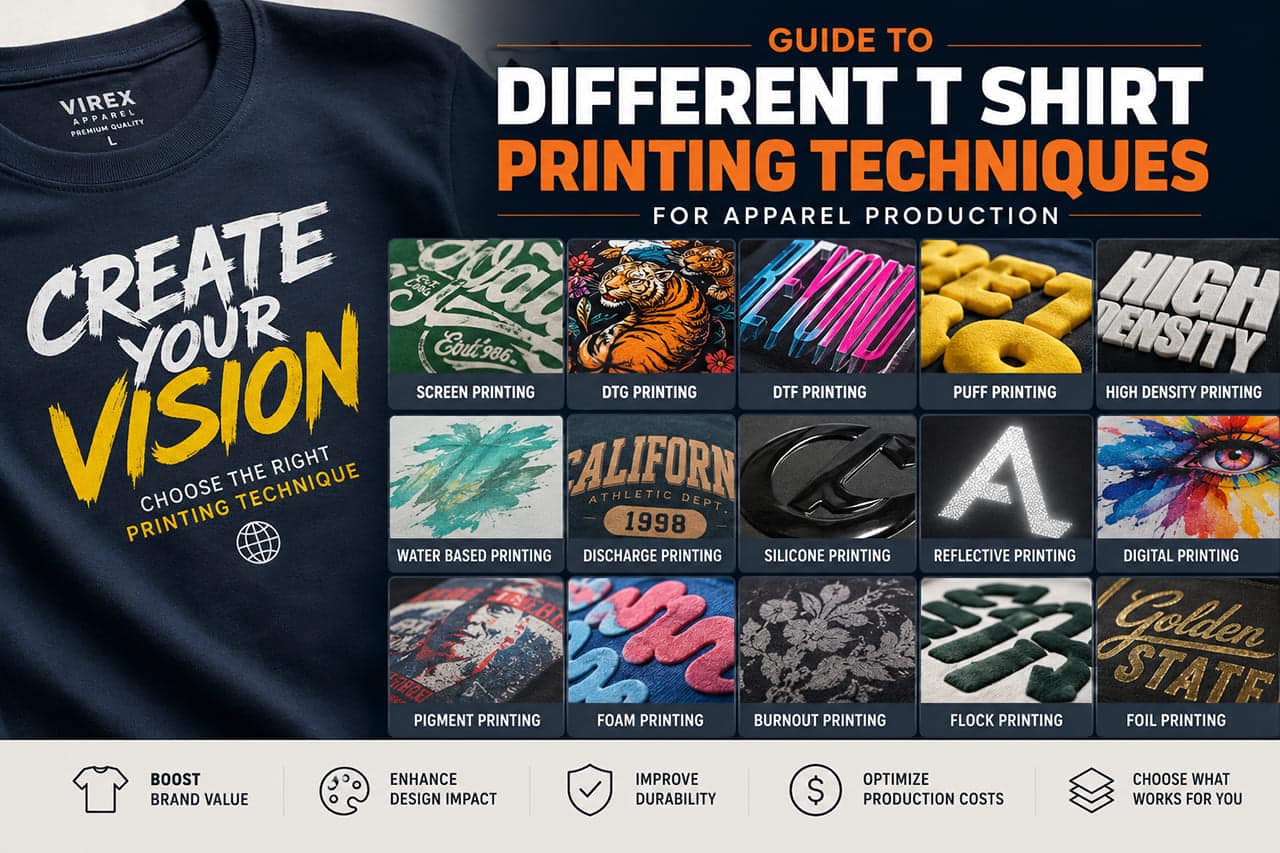
This guide covers every major t shirt printing techniques used in custom apparel production today. No fluff. Just what you need to make the right call before sampling begins.
Why T Shirt Printing Techniques Selection Matters
Your print choice locks in four things:
- Quality. Color accuracy, detail sharpness, and finish vary significantly between methods
- Durability. Some prints last hundreds of washes. Others fade or crack within a season
- Fabric compatibility. The wrong method on the wrong fabric produces poor results regardless of how good the artwork is
- Cost and MOQ. Setup requirements make certain methods impractical at low volumes
Get the method wrong and no amount of good fabric or strong design fixes it.
Screen Printing
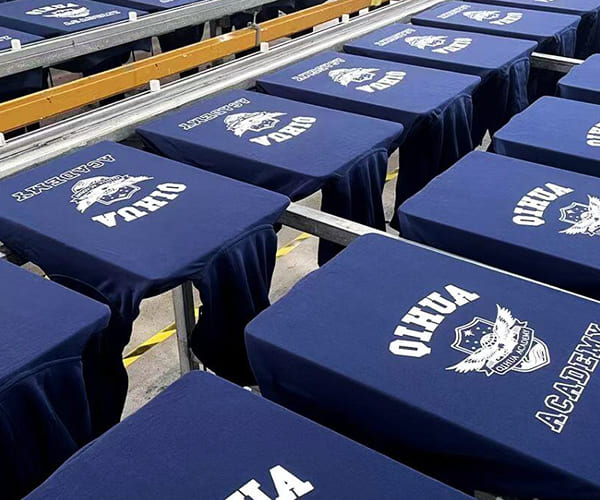
One screen per color, ink pushed through onto the fabric in sequence. The result is a vibrant, opaque, highly durable print.
This is the most cost-efficient custom printing method once you reach a high volume of prints. For most brands, that threshold is around 50 pieces per colorway.
Advantages
- Best wash durability of any method when properly cured
- Excellent color vibrancy, especially on dark fabrics
- Consistent across large production runs
- Works on cotton, blends, and most standard garment fabrics
- Specialty options available including metallics, discharge, and glow
Limitations
- Each color adds a screen and a setup cost. Complex multicolor artwork gets expensive
- Gradients and photorealistic artwork do not translate well
- Not viable for very small runs
From our production experience, screen printing consistently outlasts DTG through repeated washing. Colors stay sharper and more vibrant wash after wash. That difference becomes very visible after 20 to 30 wash cycles.
Best for: Brands producing core product in volume. This is the workhorse of apparel printing.
DTG Printing
Inkjet technology prints directly onto the fabric. No screens, no minimums, no color limits.
DTG is where most brands start. We use it ourselves during sample development to proof placement and color before committing to screens for bulk. It is the fastest way to get a sample in hand.
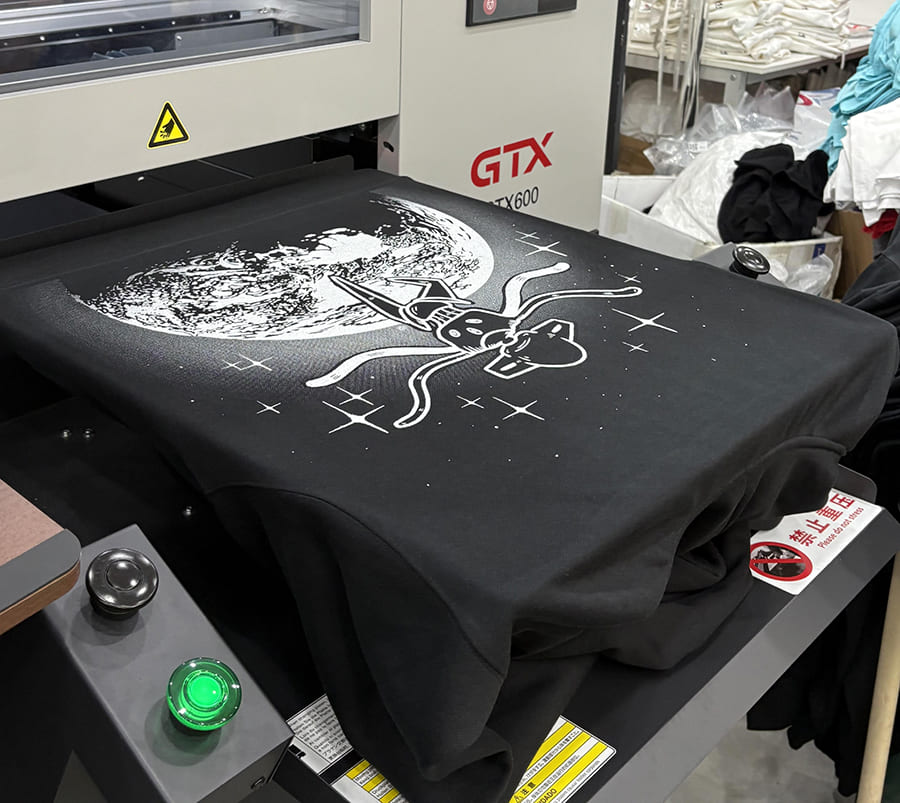
The practical advantage of DTG is flexibility. You can run one piece or one hundred. You can mix designs in a single order without additional setup. For brands managing multiple SKUs, small drops, or customer-specific pieces, that freedom has real value.
The trade-off is print quality over time. In our experience, DTG colors are less vibrant than screen printing from day one, and the gap widens after washing. It is a workable finish for many applications, but if color punch and long-term durability are priorities, screen printing is the stronger choice.
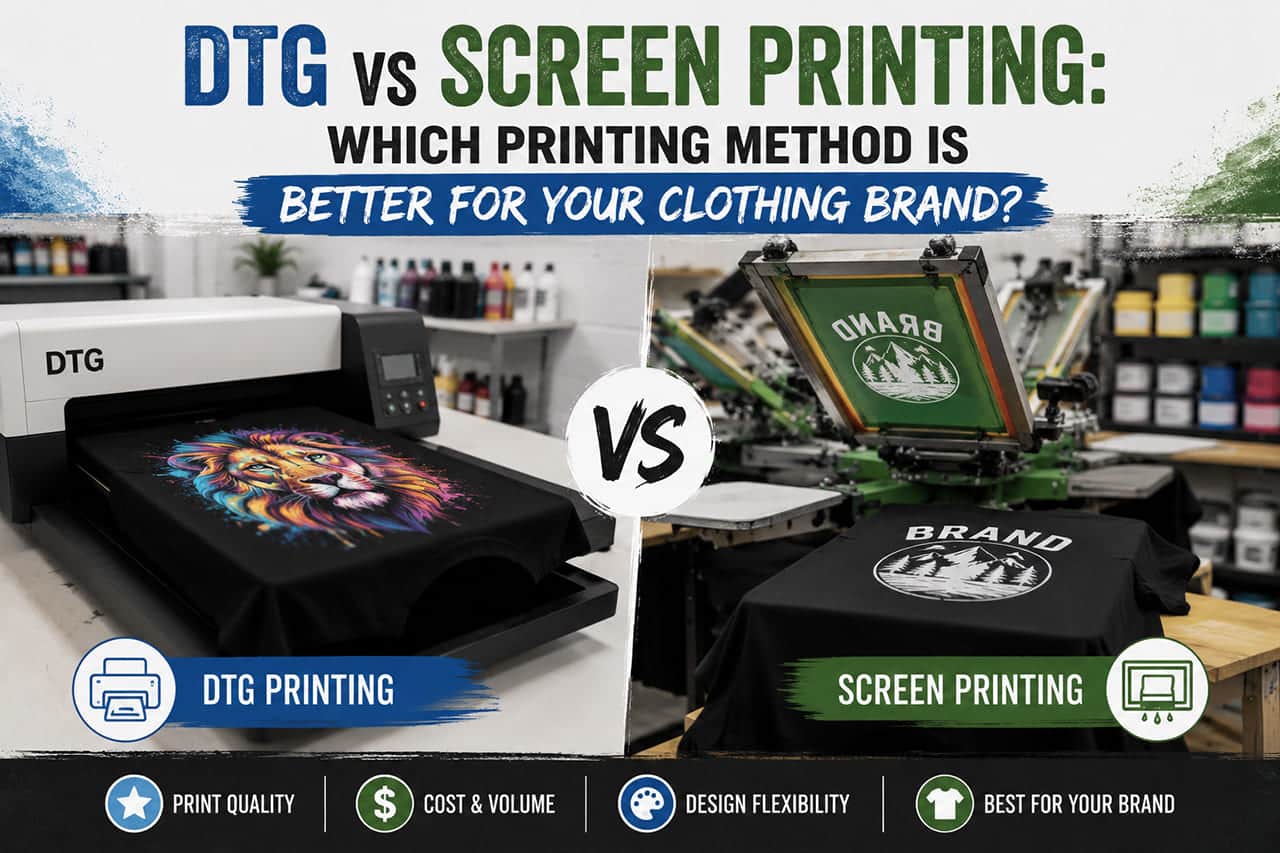
Before deciding how to scale, most brands we work with want to understand the full picture of DTG vs Screen Printing for Clothing Brands. The cost and quality gap between the two methods changes significantly as volume increases.
Best Uses
- Samples and pre-production proofing
- Short runs and limited editions
- Complex artwork with gradients, photography, or many colors
- On-demand models
Limitations
- Colors are less vibrant than screen printing, and that gap widens after repeated washing
- Wash durability is lower than screen printing even with proper pretreatment
- Dark garments need a white underbase, which adds weight and stiffness to the print
- Only performs well on 100% ring-spun cotton. Polyester and treated fabrics produce weak results
- Unit costs stay high at scale
Best for: Early-stage brands, small runs, mixed SKU orders, and artwork that would be expensive to screen print.
DTF Printing
Artwork is printed onto film, a hot melt adhesive powder is applied, then the finished transfer is heat pressed onto the garment.
The main reason brands choose DTF over DTG is fabric range. DTF sticks to cotton, polyester, nylon, and blends without the dye migration issues that affect screen printing on synthetics.
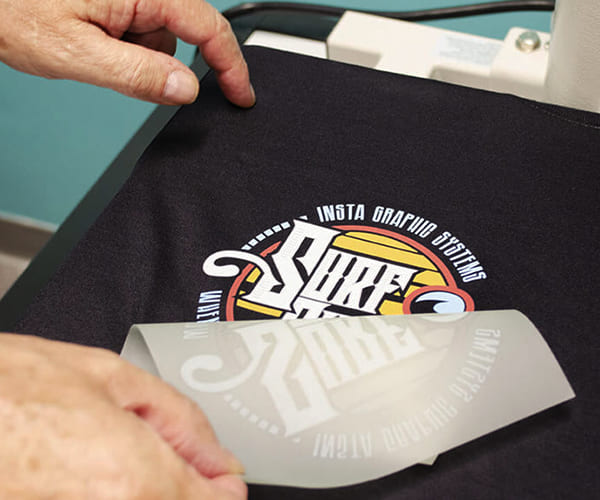
Color is strong. Detail is accurate. In production we often run DTF alongside screen printing, with DTF handling specialty fabrics or lower quantity pieces and screens covering the main volume.
Worth knowing: DTF transfers sit slightly raised on the surface. If soft hand feel is a priority for your product, factor that in.
| PROJECT | DTG | DTF |
|---|---|---|
| Fabric range | Cotton only | Cotton, poly, nylon, blends |
| Hand feel | Moderate | Slightly raised |
| MOQ | None | None |
| Best use | Complex art, samples | Multi-fabric collections |
Puff Printing and High Density Printing
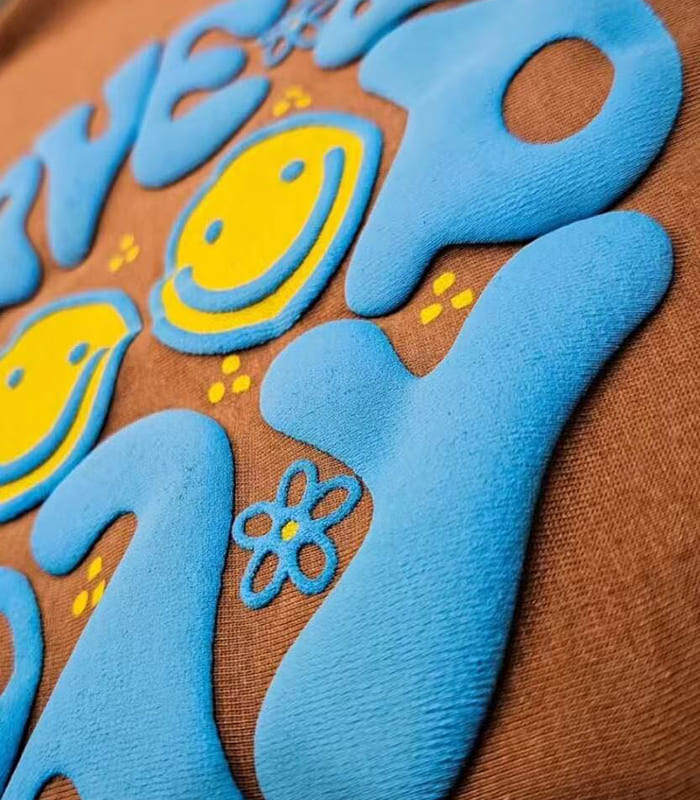
Both produce a raised, three dimensional print. The visual result looks similar. The process and practical use are different.
Puff Printing
A foaming additive in the ink expands during heat curing, lifting the print off the fabric. Soft texture, popular in streetwear for bold text and simple block graphics.
Artwork has to be simplified. The expansion blurs fine lines and small text.
High Density Printing
Thick ink is built up in multiple layers, creating a hard, structural raised print with sharp clean edges. More precise than puff. Better suited for logos and wordmarks where definition matters.
Both methods cost more and take longer than flat screen printing. Artwork prep is non-negotiable for both.
Water Based Printing and Discharge Printing
Both are about hand feel. Both produce a softer result than plastisol. They work differently.
Water Based Printing
Water based ink absorbs deeper into the fiber rather than sitting on top of it. The print feels like part of the garment. Works best on light to mid-toned garments. Dark fabrics need an underbase, which limits the softness.
Durability is solid when properly cured, though slight fading over time is more common than with plastisol.
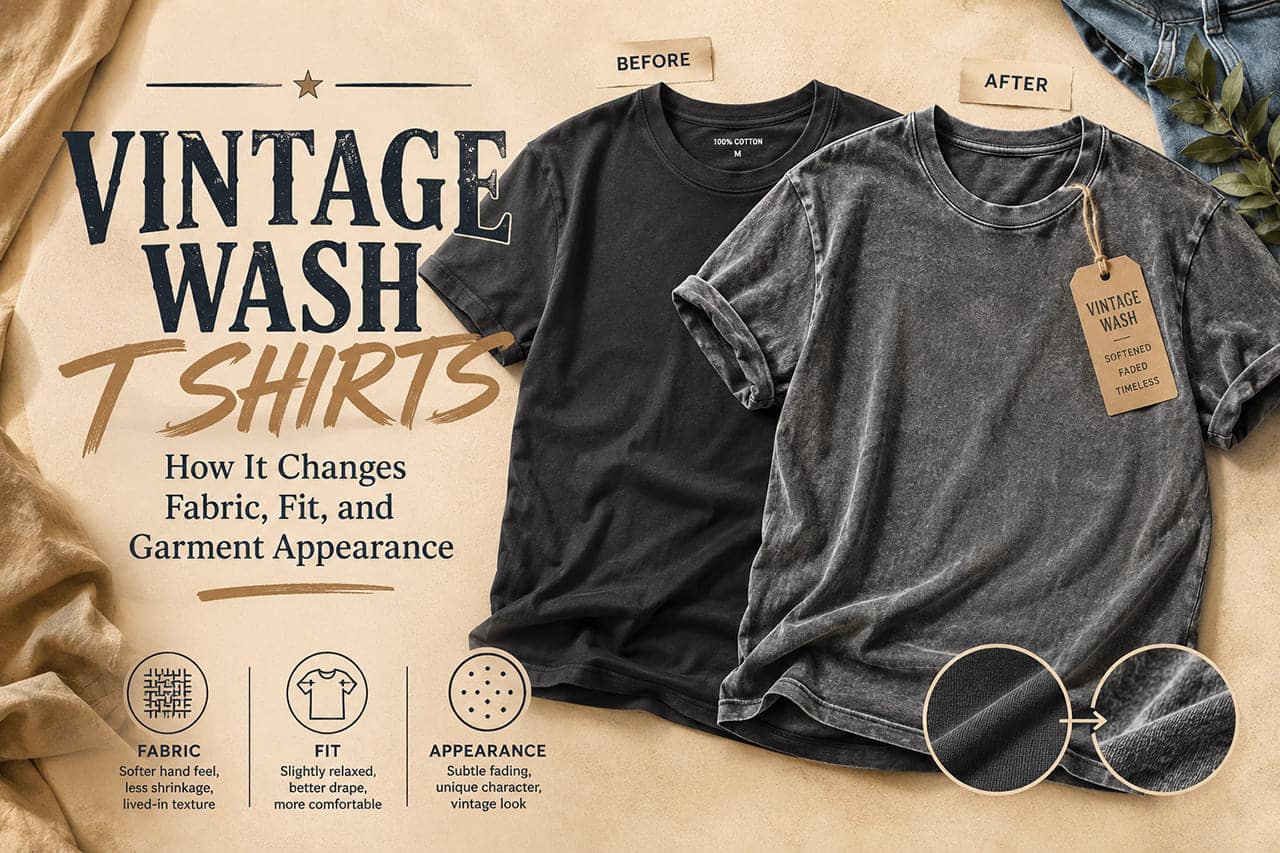
Discharge Printing
No ink applied on top. A chemical agent strips the dye from the fabric at the print location. The result is an extremely soft, breathable print with zero surface buildup.
We always run fabric compatibility tests before approving discharge jobs. It only works on reactive-dyed, 100% cotton. Polyester and synthetics do not respond. Results also vary by dye lot, so testing on the exact production fabric is not optional.
When it works, discharge is the softest print you can produce.
Silicone Printing
Silicone ink is screen printed and heat cured, producing a rubberized finish in gloss or matte. Highly durable, stretch resistant, and holds up through repeated washing and physical stress.
Where it makes sense:
- Performance and activewear where the print needs to move with the fabric
- Neck prints and interior branding on premium garments
- Exterior logo placements where a tactile, elevated finish matters
Costs more than standard screen printing. The ink is expensive and application requires tight control to keep edges clean across a full run.
Reflective Printing
Glass beads or microprisms in the ink or transfer material reflect light back toward its source. High visibility in low light. Used in running, cycling, safety workwear, and outdoor athletic apparel.
Also used in fashion for garments that change appearance under different lighting conditions.
Key limitation: Reflective properties break down with repeated washing and abrasion faster than standard prints. If you are producing technical garments with a long product life expectation, discuss wash durability specifics with your manufacturer before committing.
How Fabric Affects Print Results
Same method, different fabric, different outcome. We align on fabric first before confirming any print method.
Cotton
100% ring spun cotton is the ideal base for most methods. Good ink absorption, accepts discharge chemistry, stable for plastisol and silicone. Heavier or looser constructions can soften fine detail, so test intricate artwork before bulk sign-off.
Polyester
Dye migration is the main issue. The polyester's own dye bleeds into the ink layer and causes color shifting, especially with light inks on dark garments. DTF and sublimation handle polyester better than screen printing or DTG.
Cotton Polyester Blends
Higher cotton content behaves like cotton. Higher polyester content needs low bleed ink selection or DTF.
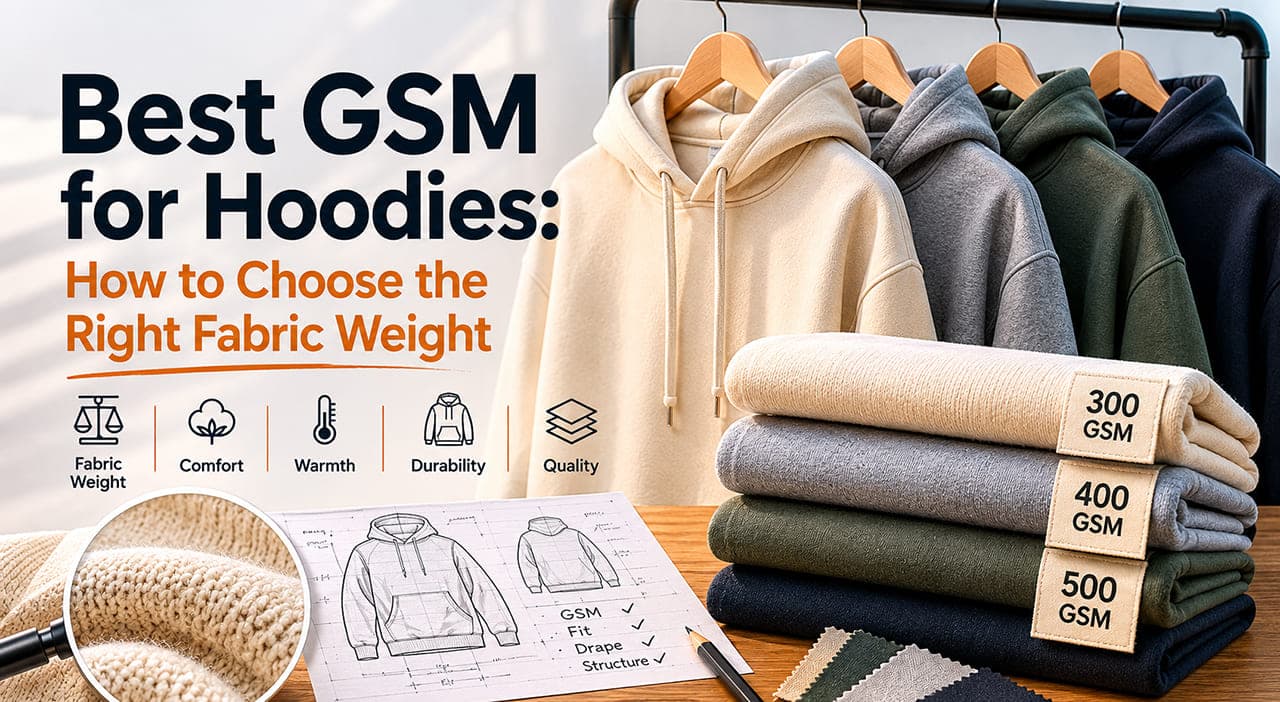
Heavyweight Cotton (350gsm to 400gsm)
Excellent for high density and puff printing. The dense structure improves ink opacity and supports the elevated, structural print results premium streetwear brands are building toward.
Common Mistakes That Cost Brands Time and Money
We see these across brands at every stage of growth.
Choosing on price. The cheapest method without checking fabric and durability compatibility always creates quality problems. Reprints and returns cost more than doing it right the first time.
Separating fabric and print decisions. Choose them together. Fabric type directly affects which methods are viable and what the finished result will look like.
Skipping wash testing. We wash test all print samples before bulk approval. Prints that look clean on arrival can crack or fade by wash five. This step is not optional.
Sending artwork that does not suit the method. Photorealistic multicolor artwork going to standard screen printing needs significant adaptation first. Confirm artwork requirements before the designer starts.
Staying on DTG too long. DTG makes sense at low volumes. Once quantities grow, screen printing delivers better consistency at a lower unit cost. Know where that crossover point is for your product.
Which Method Is Right for Your Brand
| Method | Durability | Cost | MOQ | Hand Feel | Best For |
|---|---|---|---|---|---|
| Screen Printing | Excellent | Low at volume | Medium to high | Firm to soft | Bulk production, core product |
| DTG | Moderate | High per unit | None | Moderate | Samples, small runs, complex art |
| DTF | Good | Moderate | Low to medium | Slightly raised | Multi-fabric collections |
| Puff | Good | Moderate | Medium | Soft, raised | Streetwear, vintage graphics |
| High Density | Good | Moderate to high | Medium | Firm, structural | Logos, wordmarks |
| Water Based | Good | Moderate | Medium | Very soft | Fashion basics, soft hand |
| Discharge | Good | Moderate | Medium | Extremely soft | 100% cotton, vintage look |
| Silicone | Excellent | High | Medium to high | Rubberized | Activewear, premium labels |
| Reflective | Moderate | Moderate to high | Medium | Varies | Safety, running, fashion |
Conclusion
The right method is not the most popular one or the cheapest one. It is the one that fits your fabric, suits your artwork, works at your production volume, and holds up to your customer's use.
Screen printing at volume. DTG for sampling and complex designs. DTF when fabric range is a factor. Discharge and silicone when finish quality is the priority.
Sort this out before sampling and you save time, money, and a lot of back and forth. Sort it out after and you are starting over.