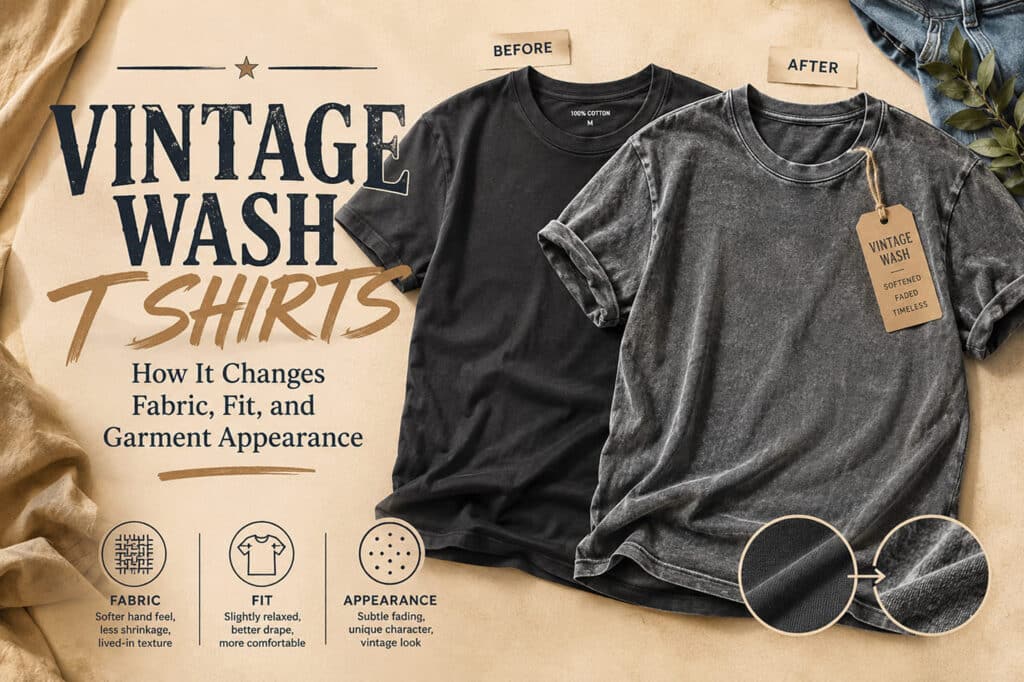
Vintage wash has become a defining feature in modern apparel, especially in streetwear. Consumers are not just buying design anymore. They are paying attention to fabric feel, comfort, and individuality. A well-made vintage wash t shirt delivers all three from the first wear.
In streetwear, where silhouettes are often simple, the fabric finish becomes the differentiator. Custom vintage wash t shirts stand out because of their softness, color depth, and natural variation—not because of what is printed on them.
Vintage wash is not just about faded color. It directly changes how a garment feels, drapes, and performs over time.
What Is Vintage Wash?
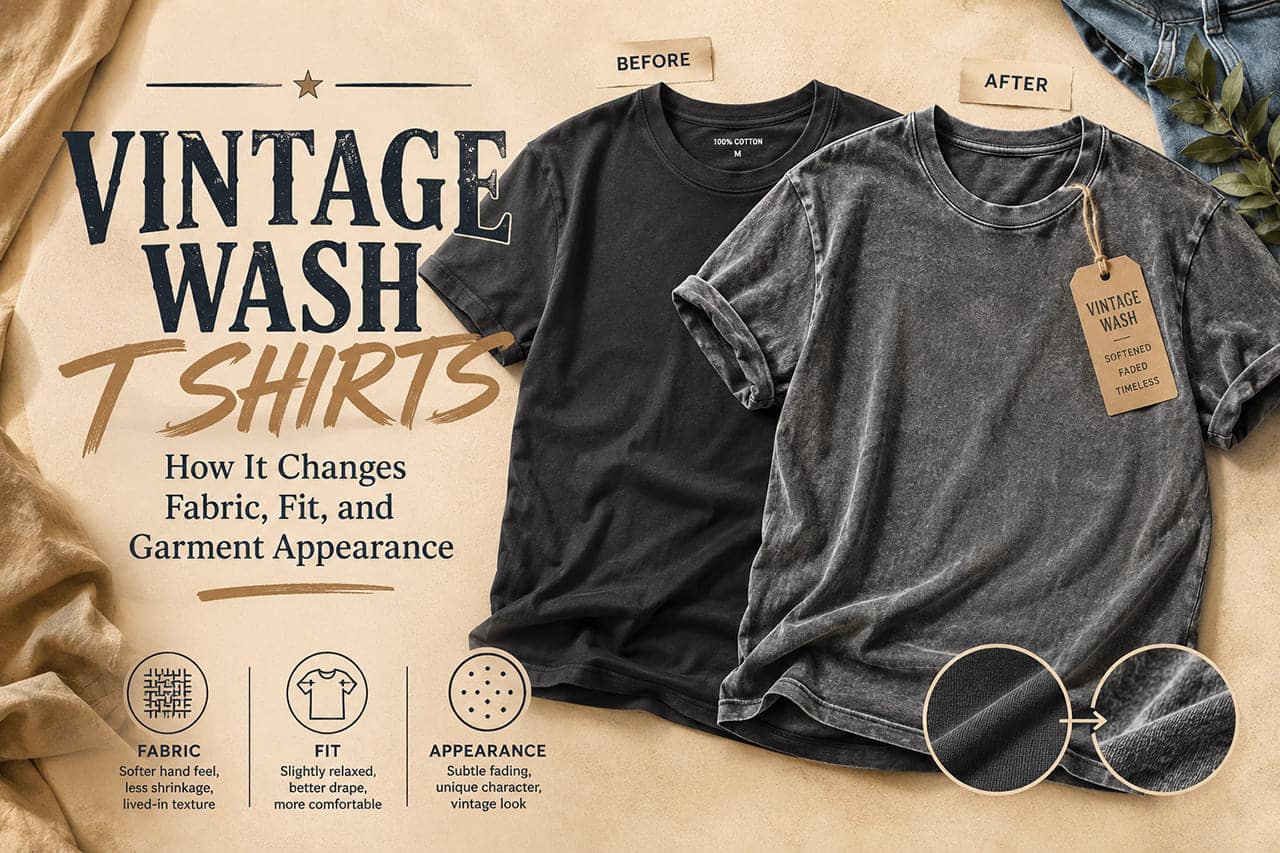
Vintage wash refers to a set of garment washing techniques used to give new clothing a worn-in look and feel. Instead of keeping the fabric in its raw, structured state, the garment is processed to soften fibers and create controlled color variation.
Key characteristics:
- Slight fading or uneven tone
- Soft hand feel and reduced stiffness
- Subtle surface texture
- A relaxed, broken-in aesthetic
This effect is engineered through controlled wash programs designed to replicate natural aging while maintaining garment structure. Too little washing and the garment feels flat. Too much and the fabric can weaken or lose structure. Getting that balance right is where the expertise sits.
How Vintage Wash Is Created
Vintage wash is applied after the garment is fully constructed, which allows the entire piece, including seams and edges, to be affected during the process.
The typical steps:
- Garment dyeing or pre-dyed fabric selection
- Enzyme or chemical treatment
- Controlled washing cycles
- Drying and finishing adjustments
Garments are loaded into industrial machines where water temperature, cycle time, machine load, and chemical concentration are all carefully managed. Small shifts in any of these variables can produce noticeably different results. This is why experienced wash houses matter — the process looks simple from the outside but requires real technical control.
After washing, garments are dried under controlled conditions. Some factories tumble dry, others air dry, depending on the finish required. Final steps may include pressing or additional softening treatments.
One practical reality: no two batches come out exactly identical. Even with tight controls, slight variations in shade and texture occur between runs. For most brands, this is not a problem. It is part of the appeal.
Types of Vintage Wash Techniques
The right vintage wash technique depends on the desired look, the fabric, and the brand's aesthetic.
Enzyme Wash
Natural enzymes break down surface fibers, softening the fabric, removing fuzz, and creating subtle, even fading. It is the most common method used in premium vintage washed t shirts because it improves comfort without heavy visual contrast.
One thing to watch: enzyme concentration and dwell time need to be dialed in during sampling. Push it too hard and you start losing fabric integrity over repeated wears.
Pigment Wash
Pigment dyes sit on the surface of the fabric rather than penetrating deep into the fiber. During washing, the pigment partially releases, creating uneven color patterns where edges and seams fade more than flat areas.
The result is the classic vintage streetwear look. It works particularly well on oversized vintage t shirts where visual depth adds character without additional graphics. Worth noting: pigment-dyed garments are sensitive to overwashing. Push the wash too hard and the garment ends up looking bleached rather than worn.
Acid Wash
Acid wash uses bleaching agents to strip color in specific areas, creating strong contrast and distinct patterns. It is a bolder, more aggressive look best suited for statement pieces. Brands requesting acid wash for the first time often underestimate how much contrast the final garment will have. Sample approvals are non-negotiable with this technique.
Mineral Wash
Mineral wash produces a textured, cloudy appearance with irregular color patterns. No two garments look exactly the same, which is part of the appeal for brands positioned around exclusivity. The visual effect sits between enzyme and acid wash in terms of intensity.

How Vintage Wash Changes Fabric Behavior
Vintage wash changes how the fabric performs, not just how it looks.
The most noticeable effect is softness. Washing breaks down rigid fibers, making the fabric more flexible and comfortable from the first wear. Drape improves too — the garment falls more naturally on the body, and stiffness, especially in heavyweight cotton, is significantly reduced.
Shrinkage is where brands most commonly get into trouble. Vintage wash pre-shrinks the garment, which is actually good for size consistency. But the shrinkage needs to be built into the pattern at the development stage, not corrected after bulk production.
From our production experience with vintage wash t shirts, we work with approximately 7% shrinkage allowance on the width and 3% on the length. To put that in practical terms: t shirt with target chest of 56 cm and body length of 76 cm can come out at around 52 cm chest and 73.7 cm length after washing if those allowances are not accounted for. That level of difference fails size inspection and leads directly to order disputes. Chest width and body length are the two measurements most affected, and once the garment is washed, there is no correcting them.
These figures are not universal—fabric weight, cotton type, and wash intensity all affect the outcome—but they are a reliable starting point for pattern development.
Fabric density can also feel different after washing. Even if the GSM has not changed, the garment often feels more compact and substantial as fibers relax and settle. For the customer, this usually reads as higher quality.

Vintage Wash and Oversized T-Shirts
Vintage wash and oversized silhouettes work well together, and that combination is a consistent thread running through streetwear right now.
Oversized fits rely on how the fabric drapes. Without washing, heavier fabrics can feel stiff and look boxy. Vintage washing softens the material and improves how it moves on the body.
From production experience, heavyweight cotton in the 220 to 300 GSM range performs best. After washing, these fabrics drape naturally, hold structure without stiffness, and deliver a hand feel that lighter fabrics cannot match. The faded tones and color variation also complement simple oversized designs — the fabric becomes part of the visual, not just the background.
Common Production Challenges with Vintage Wash
Vintage wash adds real complexity to production. Brands that treat it as a simple add-on tend to run into problems.
Color consistency is one of the biggest concerns. Small changes in washing conditions can produce visible differences in shade across a batch. For large orders, acceptable tolerance needs to be agreed upon and documented before bulk starts.
Shrinkage control is another area where things go wrong. Without proper pre-production testing, garments can fall outside size specifications after washing, leading to inspection failures and order disputes.
Batch variation is a built-in reality. Some variation is expected and part of the aesthetic. Too much inconsistency becomes a quality issue, particularly when pieces within the same order look noticeably different. Factories typically run multiple test cycles before approving bulk production. Skipping this step is a false economy.
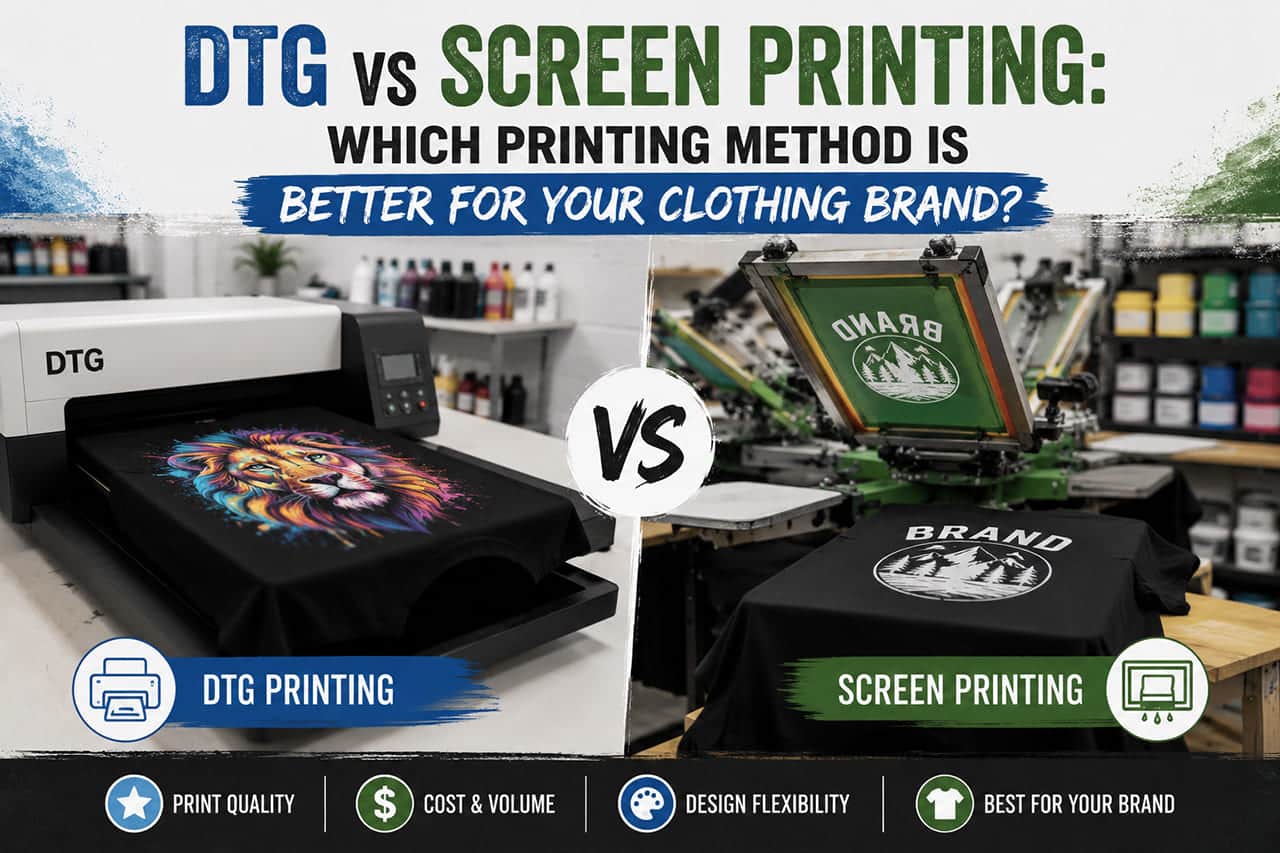
Decoration compatibility is something brands often overlook entirely. When working with batik cotton fabric for vintage wash t shirts, large-area embroidery is something we actively advise against. The abrasion and agitation during washing puts stress on embroidered areas, and the nature of batik cotton makes those sections prone to tearing. This is not a workmanship issue—it is a fabric characteristic that becomes a problem under wash conditions. Screen printing and DTG printing do not carry the same risk and work well on vintage wash garments without affecting durability.
Is Vintage Wash Worth the Extra Cost?
Vintage wash adds production steps, machine time, and quality control requirements. It costs more. For streetwear and premium basics, those costs are generally justified — the softer feel and visual character support a higher retail price and improve customer satisfaction in ways that standard garments cannot match.
The challenge is execution. Without experienced factory partners and proper sampling, results can be inconsistent. Vintage wash done well looks effortless. Done poorly, it looks like a quality control problem.
For brands ordering vintage wash for the first time: build enough lead time for proper wash testing, approve samples before committing to bulk, and understand that some batch variation is normal and expected.
FAQs
Q: What is the difference between enzyme wash and pigment wash?
A: Enzyme wash softens the fabric and creates subtle, even fading. Pigment wash creates stronger color variation, with edges and seams fading more than flat areas. Enzyme gives a cleaner result; pigment gives the classic vintage streetwear look.
Q: How much shrinkage should I expect from a vintage wash t shirt?
A: From our production experience, plan for around 7% shrinkage on the width and 3% on the length. These allowances must be built into the pattern before cutting. A shirt targeting 56 cm chest and 76 cm length can come out at 52 cm and 73.7 cm if not accounted for.
Q: Can I add embroidery to a vintage wash t shirt?
A: On batik cotton, we advise against large-area embroidery. The wash process creates abrasion that can cause tearing around embroidered sections. Screen printing and DTG printing are safer options for vintage wash garments.
Q: Why does color vary between batches?
A: Small shifts in water temperature, cycle time, or chemical concentration can produce visible shade differences between runs. This is normal in vintage wash production. Agree on acceptable color tolerance with your manufacturer before bulk production starts.
Q: What fabric weight works best for vintage wash oversized t shirts?
A: Heavyweight cotton in the 220 to 300 GSM range. After washing, these fabrics drape naturally and hold structure without stiffness. Lighter fabrics tend to lose body after washing and can look shapeless in an oversized cut.
Conclusion
Vintage wash changes both the look and performance of a garment. It improves softness, enhances drape, and creates natural color variation that standard production cannot replicate.
For brands, it adds depth and character to simple designs. For customers, it delivers comfort and individuality from day one. From a production standpoint, success depends on accurate shrinkage planning, proper wash testing, and working with experienced partners. The details matter more than most brands expect—but when executed correctly, vintage wash is not just a finishing step. It becomes a fundamental part of what makes the garment worth buying.