
Custom t-shirt manufacturing cost in 2026 depends on a combination of fabric quality, labor, decoration method, packaging, shipping, minimum order quantity, and the country of production. For brands, merch businesses, and startup founders, understanding these cost drivers is essential to building a profitable and scalable product line.
There is no single standard price for custom t-shirt manufacturing. A basic bulk order may cost only a few dollars per piece, while premium heavyweight, streetwear-style, or domestically produced shirts can cost much more. The key is not simply finding the lowest quote, but identifying the best balance of quality, consistency, lead time, and total landed cost.
What Affects Custom T-Shirt Manufacturing Cost?
Custom t-shirt pricing is shaped by several production variables, and each one can change the final unit cost in a meaningful way. In most cases, fabric, labor, printing, packaging, and logistics make up the core of the cost structure.
Fabric Quality and Weight
Fabric is usually the most important cost driver in t-shirt manufacturing. Standard cotton is generally more affordable, while combed cotton, organic cotton, heavyweight cotton, and specialty blends increase cost.

Fabric weight also matters and what is the best GSM for for t shirts. A lighter 160 GSM or 180 GSM shirt usually costs less than a 220 GSM or 240 GSM heavyweight tee because it uses less raw material. For premium streetwear brands, higher GSM fabric often improves handfeel and brand perception, but it also raises the manufacturing budget.
Sewing and Labor
Labor includes cutting, stitching, finishing, and quality control. Labor rates vary depending on the country, factory size, and degree of automation.
Factories with stronger automation may improve consistency and efficiency, especially for large-scale production. However, customized garments still require manual intervention, and more complex construction typically means higher labor costs.
Printing and Decoration
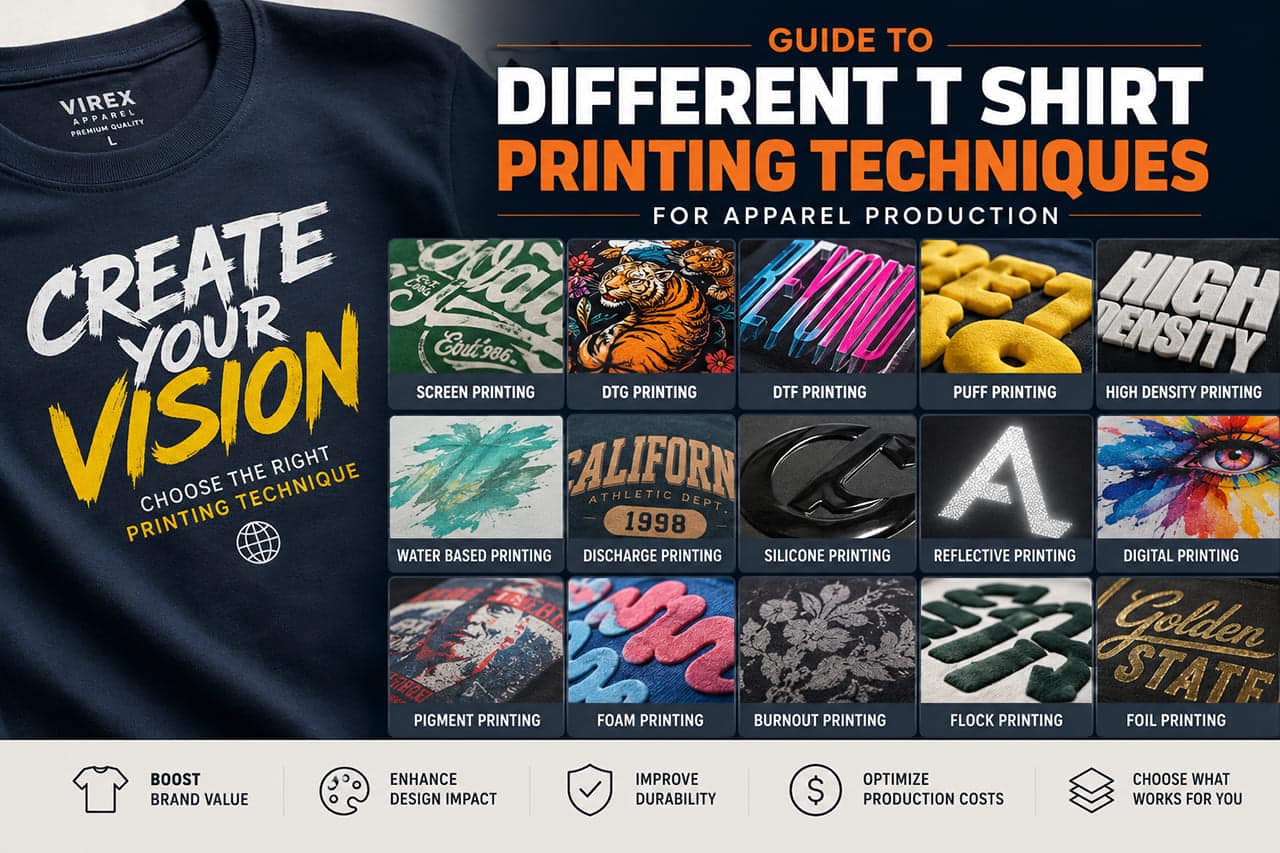
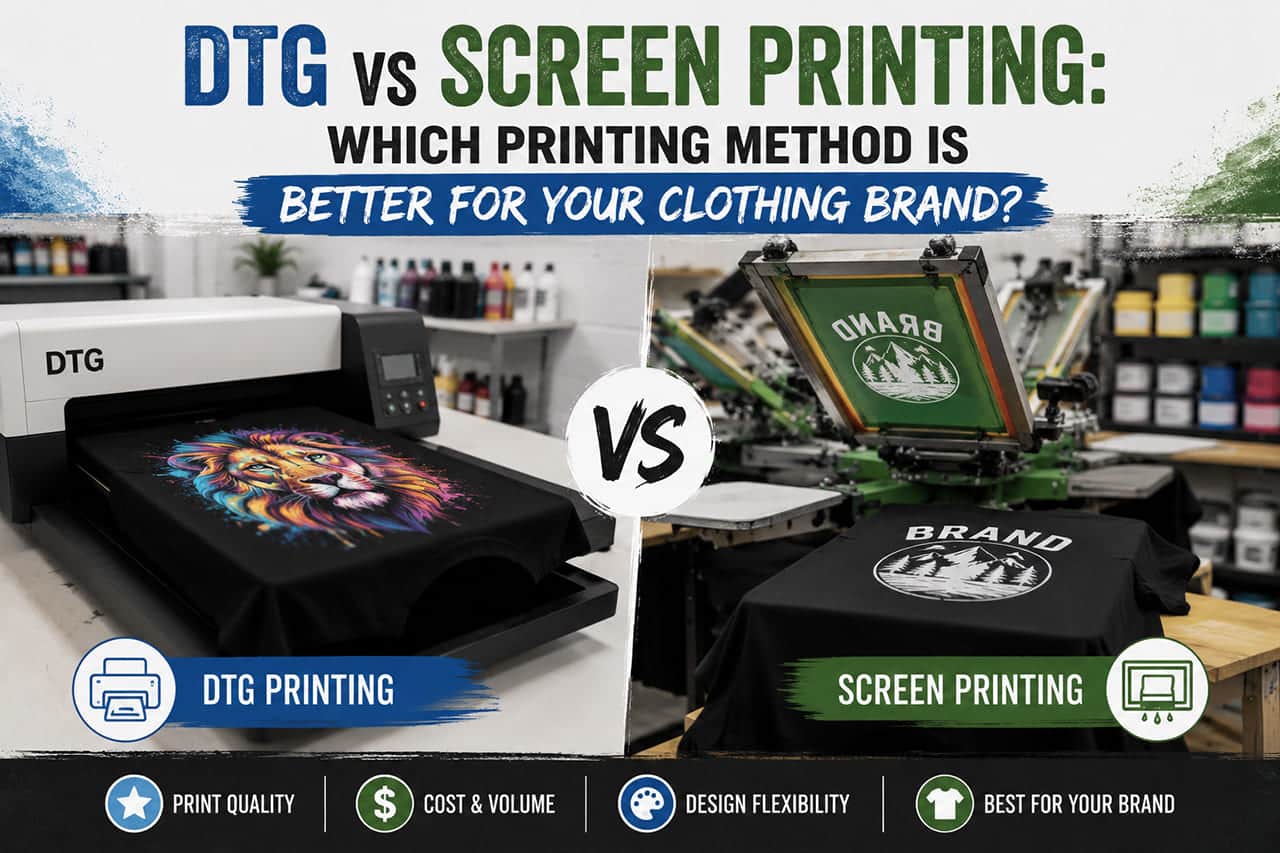
Different t shirt printing methods have a direct effect on price. Screen printing is usually the most economical choice for bulk production, while direct-to-garment printing is often better suited to smaller runs or highly detailed artwork. For more detailed information, please check Screen printing vs DTG guide.

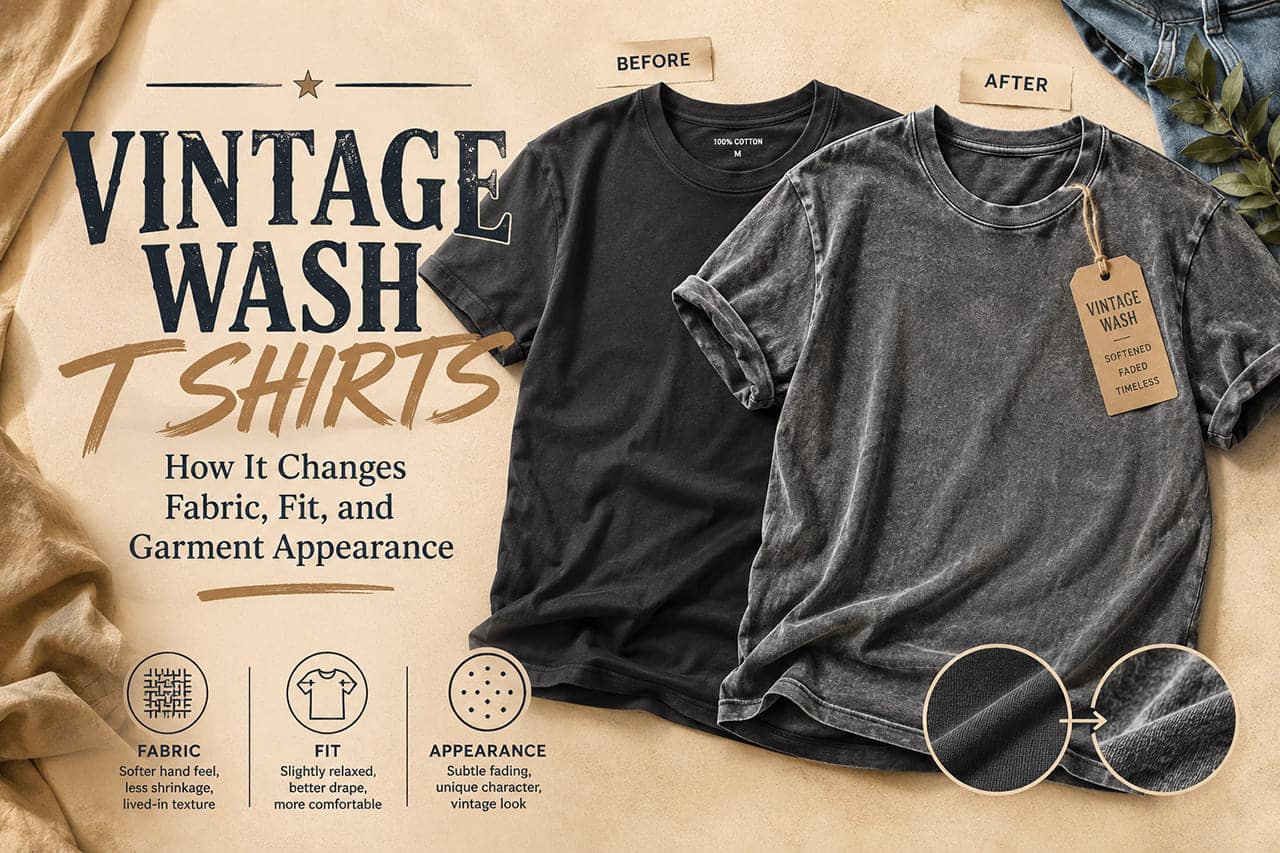
Embroidery, puff print, garment dyeing, specialty washes, and multi-location graphics all increase cost. A simple one-color chest print is much cheaper than a full front-and-back print package with sleeve graphics and special finishing.
Packaging and Branding
Packaging is often underestimated, yet it can change the total cost quickly. Polybags, hangtags, woven labels, printed inserts, custom boxes, tissue paper, and stickers all add expense.
Basic packaging is the most cost-efficient option. Premium branded packaging can elevate the customer experience, but it should be planned carefully if you are working with tight margins.
Shipping and Logistics
Shipping must be included in any realistic manufacturing budget. Factory price alone does not reflect the true cost of production once freight, customs duties, inland delivery, and urgent transport are added.

Sea freight is typically the most economical option for large non-urgent orders. Air freight is faster, but it can significantly increase landed cost and reduce margin.
Cost by T-Shirt Tier
A useful way to understand custom t-shirt manufacturing cost is to divide products into quality tiers. This helps brands estimate whether their target retail price is realistic before production begins.
Budget T-Shirts
Budget t-shirts usually have the lowest manufacturing cost. They are typically made with basic cotton, simple construction, and minimal decoration.
This tier is common for promotional merchandise, high-volume campaigns, and entry-level retail programs. The focus is cost efficiency rather than advanced fabric feel or premium detailing.
Mid-Range T-Shirts
Mid-range t-shirts are often the most commercially balanced option. They usually feature better fabric quality, cleaner stitching, and more consistent finishing than budget garments.
This category is popular with DTC brands, print-on-demand businesses scaling into bulk orders, and apparel labels that want dependable quality without entering premium pricing territory.
Premium Streetwear T-Shirts
Premium streetwear t-shirts are positioned at the top end of the market. They often use heavyweight fabric, oversized fits, garment dyeing, embroidery, specialty trims, or more advanced decoration methods.
These garments cost more to produce because they rely on superior materials and more detailed construction. For fashion brands, however, the higher cost is often justified by stronger perceived value and better retail pricing potential.
Manufacturing Cost by Country
The country of production has a major influence on custom t-shirt manufacturing cost, but the lowest quote is not always the best business decision. Each sourcing region offers a different mix of labor cost, flexibility, communication, and consistency.
China
China remains one of the most versatile sourcing destinations for custom apparel. It offers a strong supply chain, experienced production capacity, and the ability to manage fabric sourcing, cutting, sewing, printing, and packaging within a single ecosystem.
For brands that need reliable quality and flexible customization, China is often a strong choice. It is especially effective when the goal is to balance cost, scale, and product control.
Vietnam
Vietnam is increasingly attractive for larger production programs. Labor costs are often competitive, and quality consistency has improved in recent years.
This makes Vietnam a practical option for brands ordering at scale, especially when the design is relatively straightforward and lead times are manageable.
Bangladesh
Bangladesh is widely recognized for its strong cost efficiency in basic apparel production. Labor costs are often among the lowest in the industry, which makes it attractive for high-volume, simple t-shirt programs.
The trade-off is that highly customized, detail-heavy, or small-batch projects may be less efficient to execute there.
United States
U.S. manufacturing generally has the highest cost, but it offers advantages in communication, speed, and domestic control. For brands that value short lead times or "made locally" positioning, the premium may be worthwhile.
This option is especially relevant for limited drops, premium streetwear labels, and businesses that prioritize turnaround speed over unit cost.
Key Variables That Change Price
Even when two products look similar, their manufacturing costs can differ substantially. Small production details often explain why one factory quote is much higher or lower than another.
Minimum Order Quantity
MOQ is one of the most important pricing variables in apparel manufacturing. Smaller orders usually have a higher per-unit cost because setup, sampling, and overhead are spread across fewer pieces.
As order volume increases, the average cost per shirt tends to drop. This is why factories often offer better pricing for larger runs.
Design Complexity
Simple designs are easier and cheaper to produce than complex ones. Multiple print locations, many colors, oversized artwork, embroidery, and specialty effects all require more time and setup.
If your goal is to meet a specific cost target, simplifying the artwork is often one of the fastest ways to improve pricing without changing the garment itself.
Lead Time
Rush orders almost always cost more. Factories may need to interrupt their normal workflow, prioritize your order, or arrange faster shipping, all of which increase expense.
Seasonal production pressure also matters. During peak apparel periods, capacity becomes tighter and pricing may rise.
Fabric Selection
Choosing the right fabric is one of the most effective ways to control cost. Standard cotton keeps pricing lower, while combed cotton, organic cotton, heavyweight fabric, and specialty blends increase the budget.
Brands should evaluate fabric not only by cost but also by how it supports their fit, positioning, and retail price.
How to Reduce Manufacturing Cost Without Sacrificing Quality
Brands can lower custom t-shirt manufacturing cost in practical ways without damaging the product experience. The goal should be efficiency, not cutting corners.
Increase Order Volume
When possible, larger production runs usually reduce the unit cost. Factories can distribute setup costs over more pieces, which improves pricing efficiency.
If demand is predictable, consolidating orders can be one of the simplest ways to improve margins.
Simplify the Design
Reducing print locations, limiting color counts, and using standard labels or packaging can save money quickly. Fewer production steps also mean fewer opportunities for mistakes.
In many cases, a cleaner design executes better and feels more premium than an overly complicated one.
Choose the Right Fabric
Not every premium-looking t-shirt needs the heaviest fabric available. Testing different GSM ranges and cotton grades can help you identify the best balance between price, comfort, and branding.
A well-chosen mid-weight fabric can often deliver excellent results at a lower cost than a heavyweight option.
Provide Clear Technical Details
Detailed tech packs, reference samples, artwork files, and packaging instructions help factories quote accurately and produce more efficiently. Clear communication reduces revisions, delays, and hidden costs.
Many new brands lose money not because the product is too expensive, but because the development process is unclear.
Why the Cheapest Quote Can Be a Mistake
A very low quote may seem attractive at first, but it can conceal problems such as poor fabric quality, inconsistent sizing, weak construction, or communication issues. If the supplier cannot deliver reliable results, the savings may disappear after returns, rework, or missed deadlines.
A better sourcing decision is one that aligns the factory's capabilities with your product goals. In custom apparel, the right partner is not always the cheapest one; it is the one that can produce the right quality at the right scale and on the right timeline.
FAQ
Q: How much does custom t-shirt manufacturing cost per piece?
A: The cost can range from low single digits for basic bulk shirts to much higher prices for premium, heavyweight, or domestically produced garments. The exact price depends on fabric, decoration, order size, and production country.
Q: What is the cheapest way to make custom t-shirts?
A: The cheapest approach is usually a large bulk order using standard cotton, simple construction, minimal decoration, and economical packaging. Lower-cost production countries can also reduce unit cost.
Q: Is screen printing cheaper than embroidery?
A: In most cases, screen printing is cheaper than embroidery, especially for larger runs. Embroidery usually costs more because it requires more labor and machine time.
Q: Why does MOQ affect t-shirt cost?
A: MOQ affects cost because factories must spread setup, cutting, and production overhead across fewer or more units. Smaller orders usually result in a higher per-piece price.
Q: Which country is best for custom t-shirt manufacturing?
A: There is no universal best country. China is often strong for flexibility and supply chain depth, Vietnam is competitive for larger runs, Bangladesh is efficient for basic high-volume production, and the U.S. is better for speed and domestic positioning.
Q: How can I lower my t-shirt manufacturing cost?
A: You can lower cost by increasing order quantity, simplifying the design, choosing a more efficient fabric, and giving the factory clear technical instructions from the start.
Conclusion
Custom t-shirt manufacturing cost in 2026 is determined by more than just the factory quote. Fabric, labor, decoration, packaging, shipping, MOQ, and country of production all shape the final price.
For brands, the smartest strategy is to focus on total value rather than unit price alone. When quality, consistency, and lead time are aligned with your target market, your t-shirt program is much more likely to scale profitably.