
Today, working with OEM clothing manufacturers is more accessible than ever, especially if you understand the small batch approach. In this guide, we'll walk through how to find the right partner and successfully launch your brand without breaking the bank.
If you're a new fashion entrepreneur searching for low MOQ clothing manufacturers, small batch apparel production, or how to find OEM clothing manufacturers for startups, you're in the right place. Many aspiring designers dream of creating custom collections but get discouraged by stories of high minimum order quantities (MOQ) and expensive upfront costs. The good news is that in 2026, small batch production typically 30 to 100 pieces per style has become a practical and cost-effective solution for micro-brands, independent labels, and e-commerce startups.
This comprehensive guide covers everything you need: preparing a professional tech pack, sourcing reliable low MOQ OEM clothing manufacturers, navigating the sampling process, managing costs, and building long-term factory relationships. Whether you're launching activewear, sustainable fashion, streetwear, or premium basics, you'll learn how to turn your designs into reality efficiently and profitably without the traditional barriers that once blocked new brands.
What is Small Batch Production?
Small batch production refers to manufacturing in limited quantities—usually between 30 to 100 pieces per style. Traditionally, oem clothing manufacturers preferred massive orders to keep their machines running efficiently. However, the rise of micro-brands and e-commerce has forced the industry to evolve.
Choosing small batch production allows you to:
- Test the Market: See what sells before committing your entire budget.
- Reduce Waste: Align your brand with the growing demand for sustainable garment manufacturing.
- Maintain Exclusivity: Offer limited-edition pieces that create hype and urgency.
Step 1: Preparing Your Design for OEM Production
Before you send an email to any oem clothing manufacturers, you need to speak their language. A factory cannot work from a vague description or a simple hand-drawn sketch.
The Importance of a Tech Pack
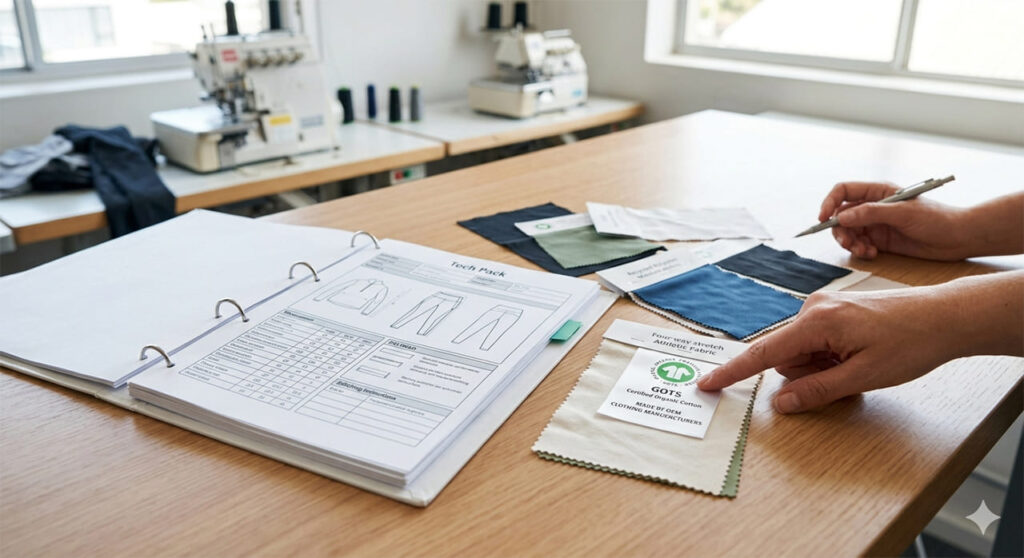
The most critical document in custom apparel production is the Tech Pack. Think of this as the blueprint for your garment. It includes technical drawings, material lists, measurements, and construction details.
Here is a clear overview of the Core Components of a Professional Tech Pack:
| Component | Description | Why It Matters |
|---|---|---|
| Technical Flats | Clean front, back, and side line drawings | Prevents design miscommunication |
| Bill of Materials | List of all fabrics, trims, and quantities | Ensures accurate costing |
| Measurement Specs & Grading | Key measurements, tolerances & size rules | Guarantees consistent fit |
| Construction Details | Stitch types, seams, and finishing | Controls quality and durability |
| Colorways & Placement | Pantone codes and pattern placement | Ensures accurate colors and prints |
| Labeling & Packaging | Label placement, hangtags, and packing specs | Meets retail standards |
| Revision History | Version number and change log | Keeps communication clear |
Professional clothing manufacturers will take you much more seriously if you provide a clean tech pack. It shows you are a business owner, not just a hobbyist.
Step 2: Finding the Right OEM Clothing Manufacturers
Finding a factory is easy, but finding a partner is hard. You want someone who specializes in your specific niche and is willing to grow with you.
Specialized Expertise
If you are starting a fitness line, look specifically for partners experienced in athleisure and activewear manufacturing. These factories have the specialized flat-lock sewing machines and four-way stretch needles required for performance gear. A factory that makes high-end suits will likely struggle with the technical requirements of gym leggings.
Sourcing Low MOQ Partners
Search for low MOQ oem clothing manufacturers. MOQ stands for Minimum Order Quantity. Platforms like Maker's Row (for US-based production) or Alibaba (for global sourcing) allow you to filter factories by their minimum requirements. Be prepared to pay a slightly higher price per unit for small runs, as the factory's setup costs remain the same regardless of order size.
Step 3: The Sampling Phase
Never skip the sample. Sampling is the most important step when working with oem clothing manufacturers. This is where your paper design becomes a physical reality.
The Prototype (Fit Sample)
The first sample is usually made with available fabric (not necessarily your final color) just to check the fit and silhouette. Does the hoodie hang correctly? Are the pockets in the right place? This is your chance to make changes before the fabric is cut for the whole order.
The Pre-Production (PP) Sample
Once the fit is perfect, the factory creates a PP sample. This is the gold standard. It uses your actual fabric, your labels, and your final colors. Once you sign off on this, the oem clothing manufacturers will begin bulk production.
Step 4: Managing Costs and Logistics
Working in small batches means your Cost of Goods Sold (COGS) will be higher. You need to balance quality with a price your customers can afford.
Raw Material Sourcing
Many OEM clothing manufacturers have stock fabrics available. Using stock fabric is a great way to save money on small runs because you don't have to pay for a custom dye lot. If you are prioritizing eco-friendly clothing production, ask your manufacturer if they have leftover organic cotton or recycled polyester from larger orders.
Shipping and Duties
Don't forget the landed cost. This includes the price of making the garment plus shipping, insurance, and import taxes. Use tools like Flexport to estimate shipping costs from overseas factories to your warehouse.
Step 5: Building a Long-Term Relationship
The best fashion brands stay with the same oem clothing manufacturers for years. This consistency leads to better quality and faster turnaround times.
Clear Communication
Be clear, be polite, and be patient. Most manufacturing delays happen because of poor communication. Use visual aids and videos to explain fit issues rather than long, confusing emails.
Quality Control (QC)
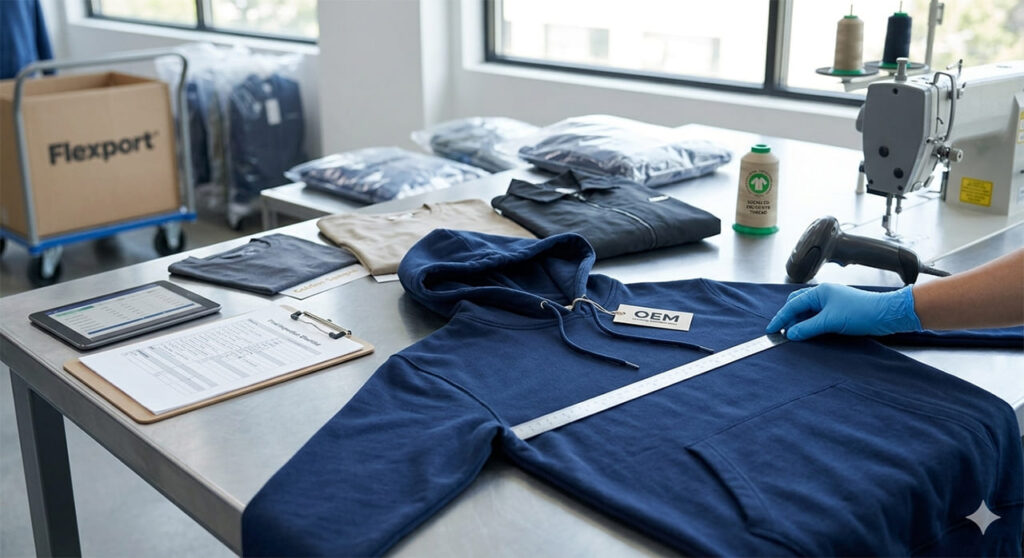
Even with a trusted partner, mistakes happen. Consider hiring a third-party inspector to check your order at the factory before it is shipped. Many oem clothing manufacturers welcome this because it ensures both parties are happy before the goods leave the building.
Why Choose the OEM Route Over Wholesale?
You might wonder if it's easier to just buy blank t-shirts and print your logo on them. While that is a valid start, hiring oem clothing manufacturers for custom apparel production is what turns a side hustle into a real brand.
When you control the manufacturing, you control the DNA of the product. You aren't limited by what a wholesaler has in stock. You can innovate with new cuts, unique fabrics, and specialized features that solve your customers problems.
Key Trends: The Future of Small Batch Production in 2026
The landscape of clothing manufacturing is rapidly evolving toward a more digital, flexible, and sustainable future. For new fashion entrepreneurs using small batch production, these changes are game-changing — they make it easier, faster, and more affordable to launch and grow your brand responsibly.
Digital Twins and 3D Sampling
Many forward-thinking OEM clothing manufacturers have adopted advanced 3D design software such as CLO 3D, Style3D, and Browzwear. This technology creates hyper-realistic digital twins — virtual 3D models of your garment that accurately simulate fabric drape, fit, movement, and even how it looks on different body types.
Instead of making multiple expensive physical samples, you can review and refine the design virtually in real time. Benefits include:
- Cutting sampling time and costs by up to 70%
- Reducing fabric waste and courier expenses dramatically
- Allowing faster decisions and quicker go-to-market
In 2026, 3D sampling is no longer a luxury — it's becoming standard for low MOQ partners. It's especially helpful for small batch runs, where every revision counts toward your budget.
Local vs. Overseas
Although overseas manufacturing typically offers the lowest unit costs, near-shoring is becoming increasingly popular. Brands in the US and Europe are shifting production closer to their markets, including Mexico, Central America, and domestic micro-factories.
Key advantages include:
- Lower carbon footprint due to reduced long-distance transport
- Significantly faster lead times and shipping (weeks instead of months)
- Easier communication and the ability to visit factories in person
- Better agility for small batch replenishment and trend-responsive drops
Checklist for Working with OEM Clothing Manufacturers
Before you sign your first production contract, make sure you have checked these boxes:
- Is the MOQ realistic for your budget?
- Does the factory have experience in your specific garment type?
- Have you received and approved a physical sample?
- Is the Lead Time (production duration) clearly defined?
- Does the factory offer sustainable garment manufacturing options?
Conclusion: Start Your Small Batch Production Journey Today
Working with OEM clothing manufacturers for small batch clothing production may feel like a big step at first, but it's often the most exciting and rewarding part of building your fashion brand. It gives you the chance to bring your unique designs to life without risking a huge upfront investment or committing to thousands of units.
By starting small, preparing a solid tech pack, approving samples carefully, and nurturing a respectful relationship with your factory, you'll learn quickly, reduce waste, and create products your customers will truly love. Many successful micro-brands today began exactly this way — testing the market with just 30 to 100 pieces before scaling up.
In 2026, the fashion industry is more welcoming to new entrepreneurs than ever before. Whether you're creating activewear, sustainable fashion, or everyday essentials, small batch production lets you stay creative, stay in control, and grow at your own pace.