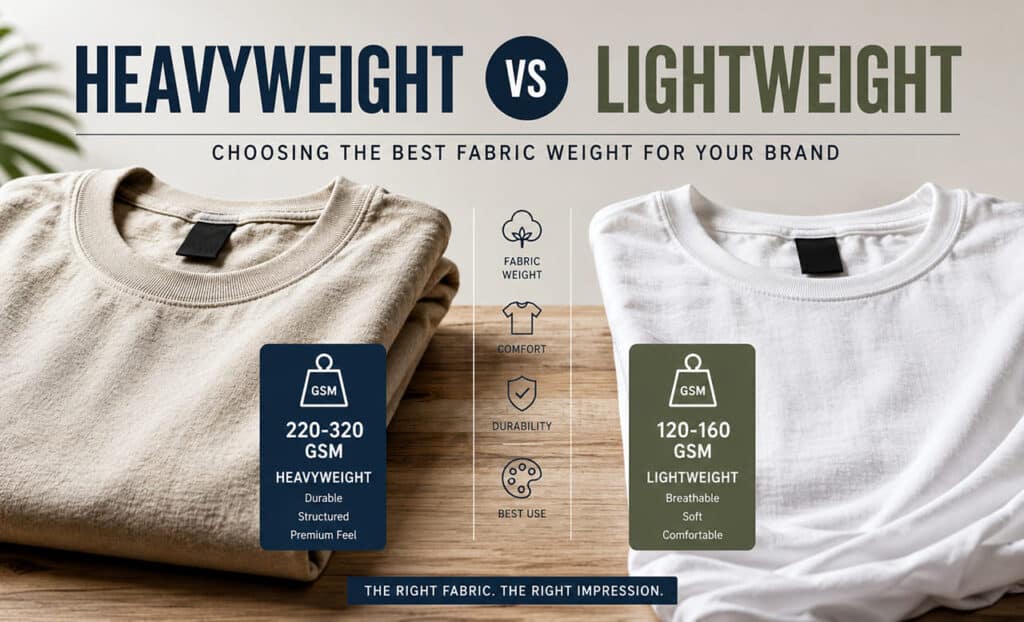
If you've ever picked up two plain white t-shirts and instantly knew which one felt "cheap" and which one felt like it was worth every penny, you know why fabric weight matters. That difference is not all in your head. It all comes down to one number: GSM.
Choosing the right fabric weight is one of the most important decisions a brand owner can make. It affects how your garment hangs, how it will hold up after 50 washes, how it prints and frankly, how your customer views your brand from the time they take it out of the bag.
In this guide we'll break down the whole heavyweight vs lightweight t-shirts debate. We'll draw on real experience in production to help you make smarter sourcing decisions.
What Does T-Shirt Fabric Weight Mean?
Understanding Fabric GSM Meaning
GSM stands for grams per square meter. It's the universal standard used across the textile industry to measure how much a fabric weighs—and by extension, how dense, thick, and structured it is.

Here's a quick breakdown of what those numbers mean in practice:
| Category | GSM Range | Feel |
|---|---|---|
| Lightweight | 120–160 GSM | Thin, airy, soft drape |
| Medium weight | 160–200 GSM | Balanced, everyday wear |
| Heavyweight | 200–280+ GSM | Thick, structured, premium hand-feel |
Understanding fabric gsm meaning isn't just technical trivia. It directly shapes your product's perceived quality, its durability, and who will actually want to wear it. A 150 GSM tee might be perfect for a summer resort brand. That same weight would feel entirely wrong for a streetwear drop.
GSM also affects your production costs, shipping weight, and the way your graphics print — all things we'll get into below.
Heavyweight vs Lightweight T-Shirts: Key Differences
Let's get straight to the comparison most brand owners are looking for.
| Feature | Lightweight (120–160 GSM) | Heavyweight (200–280+ GSM) |
|---|---|---|
| Feel | Soft, airy, delicate | Substantial, structured, premium |
| Durability | Moderate — thins over time | High — retains shape and weight |
| Breathability | Excellent | Moderate |
| Best Use Cases | Summer wear, activewear, promos | Streetwear, oversized fits, retail drops |
| Printing Compatibility | Good for dye-sub, DTG | Excellent for screen print, embroidery |
| Shrinkage Risk | Higher if not pre-shrunk | Lower, denser weave holds shape |
| Price | Lower MOQ, budget-friendly | Higher cost, higher perceived value |
| Ideal Markets | Hospitality, events, gifting | Fashion brands, premium retail |
Neither weight is objectively better. The right choice depends entirely on your brand's identity, your target customer, and where those shirts will be worn.
What Is Considered a Heavyweight T-Shirt?
In most production contexts, a t-shirt crosses into heavyweight territory at 200 GSM and above. The most popular range for premium and streetwear applications sits between 220 and 260 GSM, with some ultra-premium blanks reaching 280 GSM or higher.
Why Brands Love Heavyweight T-Shirts
Heavyweight fabrics have a natural structure to them. They don't cling, they don't go transparent in sunlight, and they hold their shape through repeated washing in a way lighter fabrics simply can't match.
For oversized t-shirt silhouettes—a staple of contemporary streetwear—heavyweight fabric is almost non-negotiable. The extra weight creates that clean shoulder drop and boxy hang that defines the aesthetic. A 140 GSM tee in an oversized cut just collapses. A 240 GSM tee falls with intention.
High-end streetwear t-shirt fabric choices tend to cluster around 220–260 GSM for exactly this reason. Brands like those you see sold in boutiques and dropping in limited runs are almost always working in this weight class.
From a customer perception standpoint, heavyweights signal investment. When someone pulls your shirt from the packaging and it has weight and body—they notice. That tactile experience is part of your brand story.
What Is Considered a Lightweight T-Shirt?
Lightweight t-shirts generally fall in the 120–160 GSM range. Some technical performance fabrics go even lower, though at that point you're usually dealing with synthetic blends rather than pure cotton.
Where Lightweight Wins
Lightweight isn't a compromise—it's a deliberate choice for specific applications.

Summer clothing lines, activewear, yoga wear, travel basics, and promotional event shirts all benefit from lighter fabric. Less weight means faster moisture movement, more breathability, and a softer, more fluid drape against the skin.
Promotional and event apparel almost universally uses lightweight fabric (130–160 GSM) because it hits a lower price point while still printing cleanly. If you're producing 2,000 shirts for a festival or a corporate event, lightweight makes financial and practical sense.
Lightweight premium cotton t-shirts can also feel incredibly luxurious if the yarn quality is high. A well-spun combed cotton at 150 GSM can feel softer than a poorly constructed 220 GSM tee. Weight and quality aren't the same thing — though they're often correlated.
Best GSM for Different Types of T-Shirts
This is one of the most practical sections of any t-shirt fabric guide, so let's be direct:
| T-Shirt Type | Recommended GSM | Notes |
|---|---|---|
| Fashion basics / everyday wear | 160–180 GSM | Soft, versatile, great for staples |
| Streetwear drops | 220–260 GSM | Structured, premium, print-ready |
| Oversized tees | 230–270 GSM | Weight needed for proper silhouette drop |
| Promotional / event tees | 130–160 GSM | Budget-friendly, functional |
| Luxury heavyweight tees | 260–300 GSM | Ultra-premium, retail-ready |
| Summer / resort wear | 120–150 GSM | Breathability is priority |
| Activewear / sport | 130–160 GSM | Often blended with polyester or modal |
These are the ranges serious custom t-shirts manufacturers work within. Knowing where your product sits helps you brief your factory clearly and avoid costly sampling rounds.
How Custom T-Shirts Manufacturers Choose Fabric Weight
When we sit down with a new brand—whether it's a streetwear startup out of LA or a premium basics label from Berlin—fabric weight is one of the first conversations we have. Here's how experienced custom t-shirts manufacturers think through the decision:
1. Target Market and End Use
A gym wear line needs breathability. A luxury streetwear brand needs structure. We start with who's wearing it and in what context before we look at a single swatch.
2. Climate and Geography
If you're selling primarily in Southeast Asia or the Middle East, even your "premium" pieces may land better at 180–200 GSM rather than 260 GSM. Heat and humidity change what feels good on the body.
3. Brand Positioning
Budget basics and premium retail need different fabrics — even if the design is identical. Your fabric weight should reflect your price point and your brand's self-image.
4. Printing Method
Screen printing and embroidery perform better on heavier, tighter-weave fabrics. DTG (direct-to-garment) printing can work across a wider range but benefits from good fabric density. Dye-sublimation is typically reserved for polyester or poly-blend lightweights.
5. Shrinkage Management
This is where brands get burned. Heavier fabrics, especially 100% cotton, shrink—sometimes significantly on first wash. A good manufacturer will recommend pre-shrunk or ring-spun cotton options or factor shrinkage into pattern sizing. Always ask about fabric shrinkage percentages before bulk production.
6. Budget and MOQ
Heavier fabrics cost more per meter and per finished unit. They also weigh more, which affects shipping. For small runs, these costs are amplified. We always map out the cost implications of different GSM options so brands can make an informed choice.
Which T-Shirt Fabric Is Best for Streetwear Brands?
If you're building a streetwear brand, the answer is usually heavyweight 100% cotton, typically in the 220–260 GSM range, with a ring-spun or combed construction for a cleaner hand-feel.

Here's why:
- Structure: Heavyweight cotton holds boxy, oversized shapes without collapsing
- Print quality: Dense weave gives screen prints clean edges and vibrant ink coverage
- Wash durability: Your customer will wash that shirt dozens of times—heavier cotton survives
- Perceived value: Customers buying a $60–$90 streetwear tee expect to feel the difference immediately
In the US and EU streetwear markets specifically, 240 GSM has become something of an industry benchmark. It's heavy enough to feel premium without being oppressive in warmer weather. Brands producing for the Japanese market often go heavier still — 260–280 GSM is common in that market's premium segment.
Oversized silhouettes are particularly dependent on the weight of the fabric. The weight of the fabric also determines the position of the shoulder seam, the length of the drop of the hem and the fall of the sleeve. Light fabric in large patterns looks sloppy. Heavyweight fabric in the same pattern looks is considered at how much the fabric weighs. Lightweight fabrics with oversized prints look sloppy. Thoughtful look in heavyweight fabric in the same pattern.
Common Mistakes When Choosing T-Shirt Fabric
Even experienced buyers make these errors. Here's what to watch for:
Choosing GSM Only by Thickness
GSM measures weight, not quality. A high GSM can still be made from low-grade cotton. Always ask about yarn quality—combed, ring-spun, or open-end spun makes a real difference in softness and longevity.
Ignoring Shrinkage
Unaddressed shrinkage is one of the leading causes of customer complaints in custom apparel. If your manufacturer doesn't bring this up, you should. Ask specifically about pre-shrunk options or size grading adjustments.
Choosing Wrong Fabric for Climate
We've seen brands based in humid climates order 260 GSM tees in bulk because they wanted "premium"—and then find their customers never wear them because they're too hot. Match your fabric weight to your real-world wearing conditions.
Not Testing Samples Before Bulk
This sounds obvious, but it's regularly skipped to save time or money. Always request samples, wash them, wear them, and print a test graphic on them before committing to a production run.
Expert Tips for Choosing the Right T-Shirt Fabric
These come straight from the factory floor:
1. Request physical swatches, not just photos. Digital renders and spec sheets don't tell you how a fabric actually feels. Swatches are non-negotiable.
2. Always wash-test your samples. Wash at 40°C twice and measure the garment before and after. Check for shrinkage, color fastness, and whether the fabric pills.
3. Print-test before bulk. Run a small print test on your chosen fabric with your actual design. Different GSM and weave densities absorb ink differently.
4. Compare yarn quality across suppliers. Two fabrics can have the same GSM and feel completely different because of yarn quality. Ask whether the cotton is combed and ring-spun — these processes produce a finer, smoother yarn.
5. Understand fabric gsm meaning before you spec anything. Every conversation with your manufacturer will go better if you already know what GSM range you're targeting. It saves time, prevents miscommunication, and signals to the factory that you're a serious buyer.
6. Build a reference kit. Keep one shirt from every supplier you've ever sampled. Over time, this physical library becomes invaluable when briefing new production runs.
Conclusion
There is no clear winner in the heavyweight vs lightweight t-shirts debate. It has the right answer for your brand, your market, your product, and your customer.
Lightweight fabrics are ideal for summer clothing, activewear, and promotional clothing. They're breathable, cheap, and practical. Heavyweight fabrics deliver structure, durability, and the kind of premium hand-feel that supports a higher retail price point and a stronger brand perception.
One of the most practical skills a brand owner can develop is understanding what GSM means in fabric and knowing how to use that knowledge when briefing your manufacturer. It's the difference between what you asked for and what you really wanted.
Work with knowledgeable custom t-shirts manufacturers who will ask the right questions about your end use, your market, and your goals before recommending a fabric. The best factories do more than cut and sew services. They advise. Select partners who see fabric selection as a conversation, not a transaction.
Frequently Asked Questions
Is 180 GSM good for T-shirts?
Yes. 180 GSM sits in the medium-weight range and works well for everyday fashion basics and brand staples. It has enough body to feel substantial without being heavy. It's a popular choice for brands that want a balanced, versatile tee that works across seasons.
What GSM is considered heavyweight?
Generally, 200 GSM and above is considered heavyweight. Most premium streetwear and fashion brands work in the 220–260 GSM range. Anything above 260 GSM is considered ultra-heavyweight and is typically positioned as a luxury or workwear product.
Are heavyweight T-shirts better quality?
Not automatically. Higher GSM means more fabric density and usually greater durability, but quality also depends on yarn type, cotton grade, and construction. A combed ring-spun 180 GSM tee can outperform a poorly made 250 GSM tee in softness and longevity. Weight is one quality signal — not the only one.
What is the best fabric for oversized T-shirts?
100% combed ring-spun cotton in the 220–260 GSM range is the industry standard for oversized silhouettes. The weight gives the garment structure, allows it to hold its shape over the shoulders, and produces the clean boxy drop that defines the oversized aesthetic.
Which T-shirt fabric lasts longer?
Heavier fabrics (200 GSM+) made from combed or ring-spun cotton generally last longer under repeated washing and wear. The denser weave resists pilling, maintains color better, and holds its shape. That said, fabric care also matters — even a heavyweight tee degrades quickly if washed at high temperatures or tumble-dried aggressively.