After 10 years in custom apparel manufacturing, I can tell you it's the little details that make a garment stand out. Many brands put significant effort into finding the perfect body fabric, but the real difference between a basic tee and a premium piece often lies in the trims, especially the collar, cuffs, and hems. These often overlooked details are usually made from rib fabric and go through the most daily wear and stretching. When the right rib fabric is used, it keeps collars and cuffs clean, structured, and comfortable even after repeated washing.
If you're serious about starting a streetwear label, launching your own t-shirt line, or getting your brand's varsity jackets just right, knowing what is rib fabric and how to choose the right kind will save you headaches and set your products apart in the market.
What Is Rib Fabric?
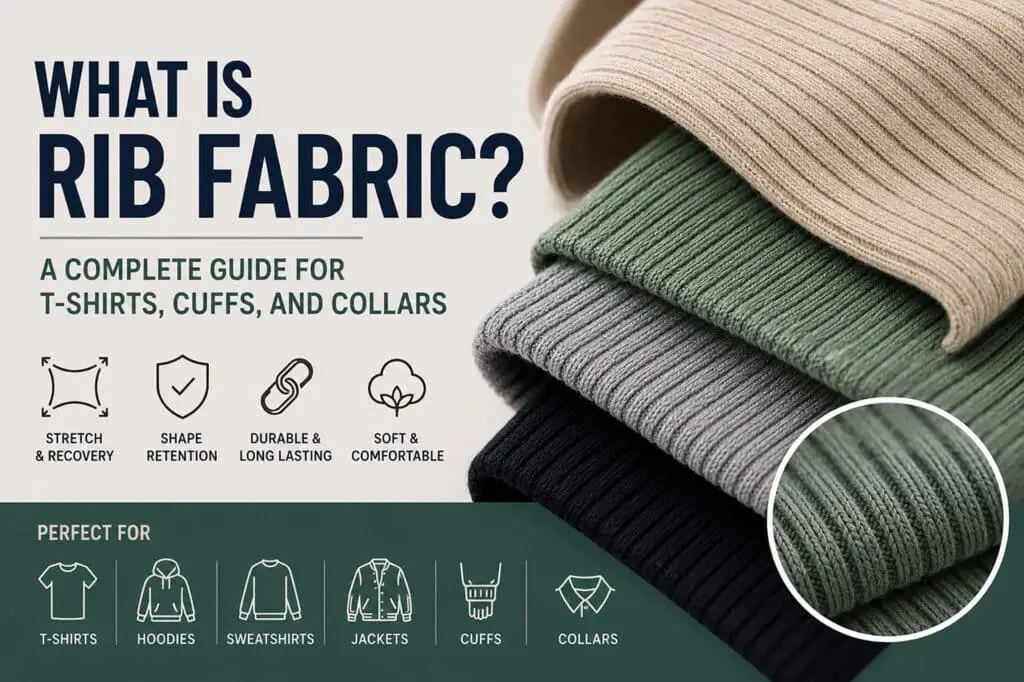
Ask any experienced apparel manufacturer, and they'll tell you: rib fabric is a type of knit textile that features vertical ridges, what we call "ribs", formed by alternating knit and purl stitches. Unlike woven fabric, which is stiff and holds its shape until it wears out, rib knit is all about flexibility and bounce back. That's why you see it used almost everywhere a garment needs to stretch, recover, and keep its shape, like collars and cuffs.
What Is Rib Knit Fabric?
Rib knit fabric is made on special knitting machines. We use both circular and flat-bed varieties at our factory. These machines alternate the direction of the needles, giving you those signature raised lines. The result is a fabric that's thick, double sided, and seriously elastic. That elasticity is why, even after years of pulling a tee over your head or shoving your hands through a sweatshirt cuff, the fabric still snaps back, at least if you use the good stuff.
How Rib Fabric Creates Stretch
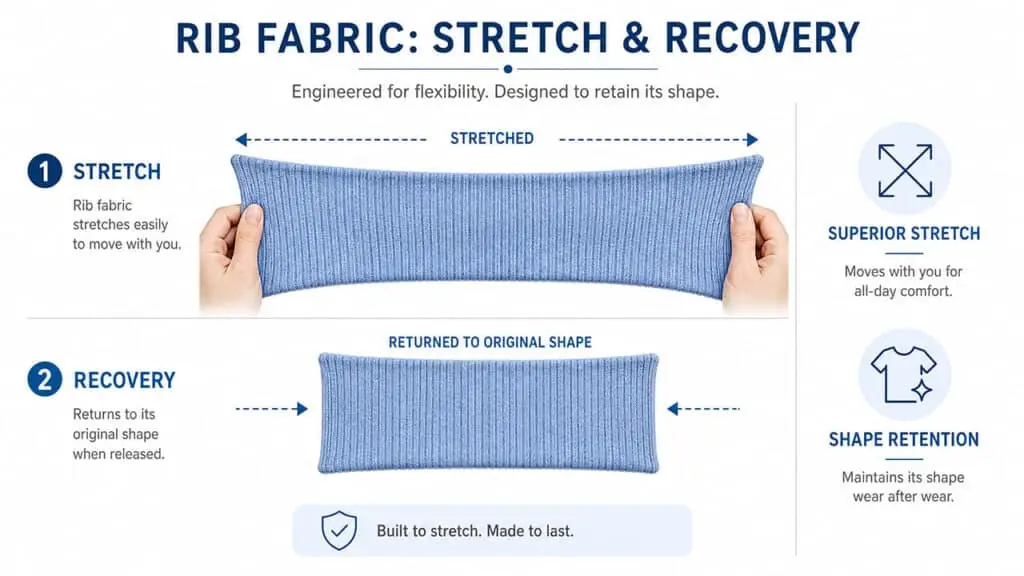
Here's the practical secret: the stretch in rib knit comes from its structure. When you pull on rib fabric, the loops open up and the ribs move apart. Release the tension, and the loops pull everything back into place. This is what makes rib perfect for garment areas that experience constant movement and stress. Over the years, I've tested hundreds of rib fabrics, and the best ones always have that lively snap back.
Rib Fabric vs Jersey Fabric
I often get asked, "Why not just use jersey for everything?" Here's why: jersey fabric is a single knit, smooth faced fabric with a bit of stretch in both directions, but it doesn't recover nearly as well as rib. Jersey works wonderfully for the main body of a tee or hoodie, but if you make a collar or cuff out of it, you'll quickly see sagging and misshapen garments after repeated washing. Rib knit wins for trims because of its superior horizontal stretch and recovery. For an in depth comparison, check out What Is Jersey Fabric?
Common Types of Rib Fabric
Not all rib fabric is created equal. Over the years, we've experimented with dozens of types to suit different client needs. The construction, fiber content, and GSM all play a role in how the rib knit performs and feels.
1x1 Rib vs 2x2 Rib
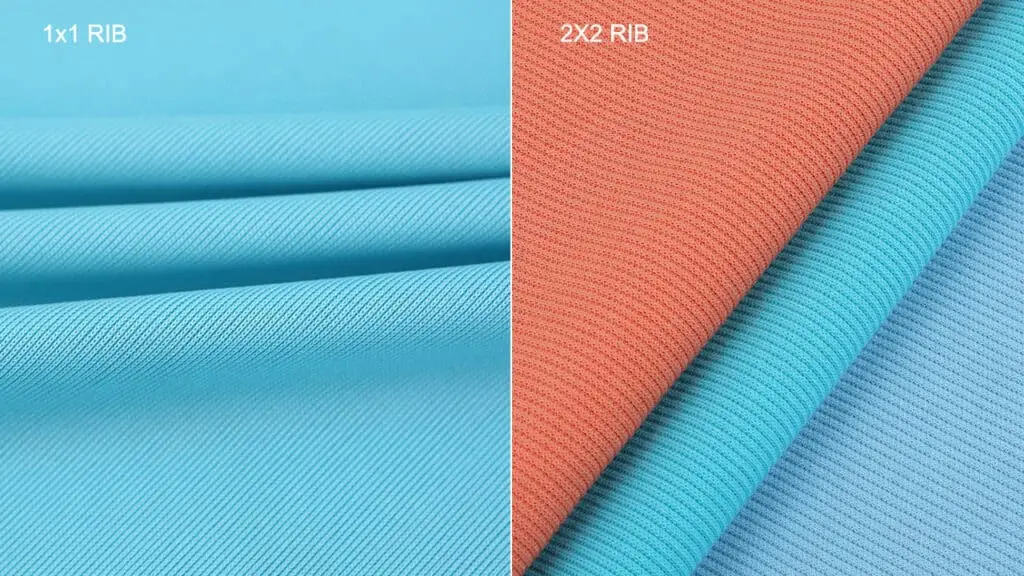
- 1x1 rib fabric is the go to option for most t-shirt collars. It alternates one knit stitch with one purl stitch, creating a fine, even rib. It's tight, stretchy, and lays flat, making it ideal for collars that hug the neck without feeling restrictive.
- 2x2 rib fabric alternates two knit stitches with two purl stitches, creating a chunkier and more pronounced rib texture. I love using 2x2 rib for hoodies, sweatshirts, and varsity jackets because it provides more structure and gives garments a premium appearance.
Cotton Rib Fabric
If you're after softness and breathability, cotton rib fabric is the classic choice. In our shop, we usually stick to combed or ring-spun cotton for a smoother and more consistent finish. Cotton rib is what you'll find on most high-quality casual wear. If sustainability matters to your brand, look for rib fabric made from certified organic or responsibly sourced cotton, such as those recognized by Textile Exchange.
Stretch Rib Fabric and Spandex Blends
Sometimes you need even more elasticity and resilience. That's where spandex blended rib fabric comes in. Adding just 3% to 8% spandex can dramatically improve stretch and recovery, making it ideal for fitted styles or activewear. Polyester blends are also popular because they improve durability and color retention, especially for streetwear garments that are meant to be worn heavily.
Why Rib Fabric Is Used for T-Shirt Collars and Cuffs
In my experience, the areas where you need rib knit the most, collars, cuffs, and hems, are also the first places consumers notice quality.
Rib Fabric for T-Shirt Collars
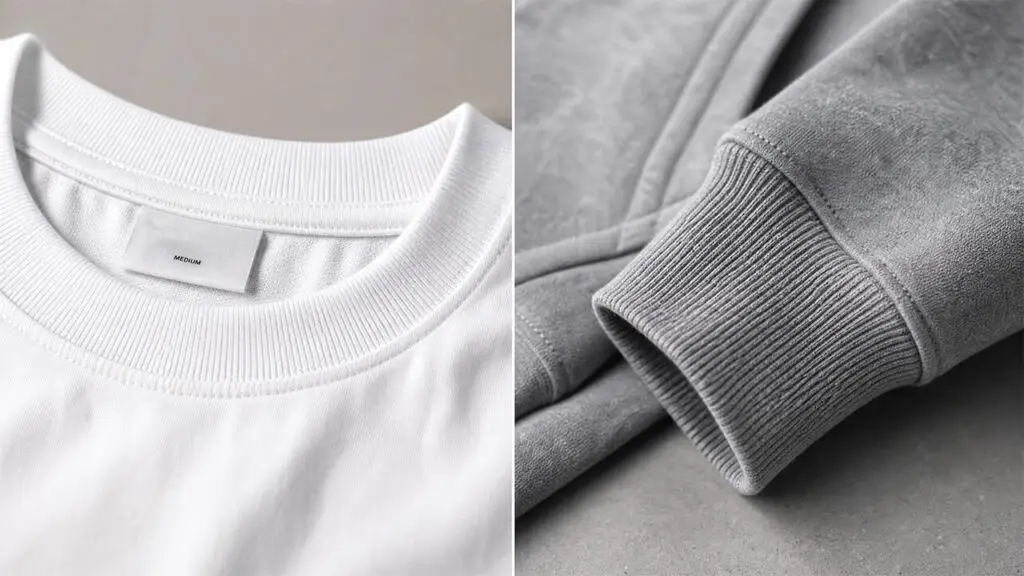
The collar is the first thing your customer touches and often the first part of the garment to show wear. That's why 1x1 rib is considered the industry standard for t-shirt collars. It stretches easily over the head and returns to shape wash after wash. If you cut corners on rib quality here, you'll end up with stretched out collars that hurt your brand image.
Rib Knit Cuffs for Hoodies and Sweatshirts
Cuffs take more abuse than almost any other part of a hoodie or sweatshirt. People constantly pull, roll, and wash them. That's why we usually use heavier 2x2 rib fabric in these areas. It holds its shape better, resists bagging, and gives the garment a more premium and structured finish. Want to learn more about hoodie construction? Here's a resource: Best Fabric for Hoodies.
Why Premium Brands Use Rib Fabric
After a decade in the business, I can confidently say that brands focused on quality always invest in high-quality rib fabric for their trims. A thick, clean, and structured rib collar or cuff instantly signals premium construction. Whether it's pure cotton or a spandex blend, the rib tells your customer that every detail was carefully considered.
Understanding Rib Fabric GSM
GSM (grams per square meter) is a major factor in how rib fabric feels and performs. I always explain to clients that GSM helps you choose between softness, structure, and durability.
Lightweight Rib Fabric
- 150–200 GSM: Perfect for lightweight tees, summer tops, or delicate women's garments. The fabric is soft and stretchy, but it is not as structured.
Midweight Rib Fabric
- 200–300 GSM: This is the most versatile range which is ideal for basic t-shirt collars, standard hoodies, and everyday trims. Balances comfort and resilience.
Heavyweight Rib Fabric
- 300+ GSM: The choice for premium streetwear, oversized tees, varsity jackets, and luxury pieces. Thick, substantial, and built to last.
Choosing the right GSM is about matching the fabric to your design goals. Want a chunky, standout collar? Go heavyweight. Need something subtle? Opt for a lighter rib.
How Clothing Manufacturers Test Rib Fabric Quality
In our workshop, before we ever cut bulk rib fabric, we put it through a series of practical tests. Here's what that looks like from the inside:
Stretch Recovery Testing
We stretch the rib fabric repeatedly, measuring how well it bounces back. The best rib fabric returns almost exactly to its original width; poor-quality rib stays stretched out, which leads to limp collars and cuffs.
Shrinkage and Wash Testing
Rib trims are washed and dried in commercial machines to see how much they shrink or lose shape. Pre-shrinking or sourcing pre-laundered rib is standard for us—it prevents nasty surprises like puckering or distorted necklines after the garment is finished.
Fabric Inspection Before Bulk Production
Every roll of rib fabric is inspected for:
- Pilling resistance (does it stay smooth after friction?)
- Colorfastness (does the dye bleed or fade?)
- Stitching compatibility (can it be sewn cleanly to the main fabric?)
- Surface consistency (any runs, snags, or unevenness?)
If you're exporting or catering to global clients, look for rib fabric with OEKO-TEX Standard 100 certification to guarantee safety and compliance.
Is Rib Fabric Good for Streetwear Brands?
From my perspective, heavyweight rib fabric has become a signature of premium streetwear and oversized fits. Today's fashion-forward consumers expect thick collars and cuffs as a sign of craftsmanship and intent.
Heavyweight Rib Fabric for Streetwear
A chunky, structured rib collar or cuff is now a hallmark of high-end streetwear. It makes oversized tees and hoodies look deliberate—never sloppy—and keeps their shape over time.
Vintage and Garment Dyed Rib Fabric
Garment-dyed rib trims are another trend. The dye interacts with the rib differently than with the body fabric, creating a unique, lived-in color effect that's highly prized in vintage-inspired lines.
Premium Rib Collars for Oversized T-Shirts
For oversized tees, a substantial rib collar is essential for balancing proportions and keeping the neckline from looking flimsy. After years of manufacturing, I can tell you: this detail alone can make your product stand out in a crowded market.
Conclusion
After a decade of hands-on experience in custom clothing manufacturing, I've learned that rib fabric is one of the most important (and too often overlooked) components in modern apparel. Its unique combination of stretch, recovery, structure, and durability is what keeps your collars crisp, your cuffs snug, and your customers coming back for more.
If you want your collection to stand out in both quality and longevity, give rib fabric the same level of attention you give your body fabrics, stitching, and fit. The results will absolutely show in the finished product.
Key Takeaways
- Rib fabric is essential for durable, stretchable collars, cuffs, and hems.
- 1x1 rib is the industry favorite for t-shirt neckbands because of its perfect balance of stretch and structure.
- Heavyweight rib fabric is now a hallmark of premium streetwear and oversized garments.
- GSM determines the thickness, structure, and feel—choose it wisely for your specific needs.
- Rigorous testing and sourcing from trusted suppliers ensure that your rib trims meet top standards for quality and longevity.
Frequently Asked Questions
Q: What is rib fabric used for?
A: Rib fabric is primarily used for trims, T-shirt collars, cuffs on hoodies and sweatshirts, hems, and varsity jacket edges, anywhere you want stretch, recovery, and structure. It's also ideal for fitted tops and thermal layers.
Q: What is the difference between rib fabric and jersey fabric?
A: Jersey is smooth and soft, making it ideal for body panels, but it lacks the strong recovery of rib fabric. Rib fabric is more textured, stretchier, and better at bouncing back, which makes it perfect for trims that go through constant wear and stretching.
Q: Is rib fabric good for t-shirt collars?
A: Absolutely! It's the best choice for creating a collar that stretches comfortably while still returning to its original shape, even after repeated washing.
Q: What is 1x1 rib fabric?
A: It's a rib knit fabric made with alternating knit and purl stitches, creating a fine, stretchy texture that works perfectly for neckbands and cuffs.
Q: Why do premium brands use heavyweight rib fabric?
A: Heavyweight rib fabric provides long-lasting structure, a premium feel and helps collars and cuffs maintain their shape throughout the life of the garment.