When you're building a clothing brand, fabric selection is not a detail you can afford to overlook. The textile you choose shapes how your product feels, performs, prints, and lasts—directly impacting customer satisfaction and brand reputation. In the world of T-shirt and streetwear production, few fabrics match the popularity and versatility of jersey fabric.
Jersey knit fabric is the backbone of the global t-shirt industry. From everyday basics to luxury oversized tees, jersey's distinctive combination of softness, stretch, breathability, and print compatibility makes it the go-to choice for emerging and established brands alike. Whether you're sourcing blanks for a startup, building a premium private label line, or innovating in custom streetwear, understanding jersey fabric at a technical level empowers you to make smarter production decisions and elevate your apparel line.
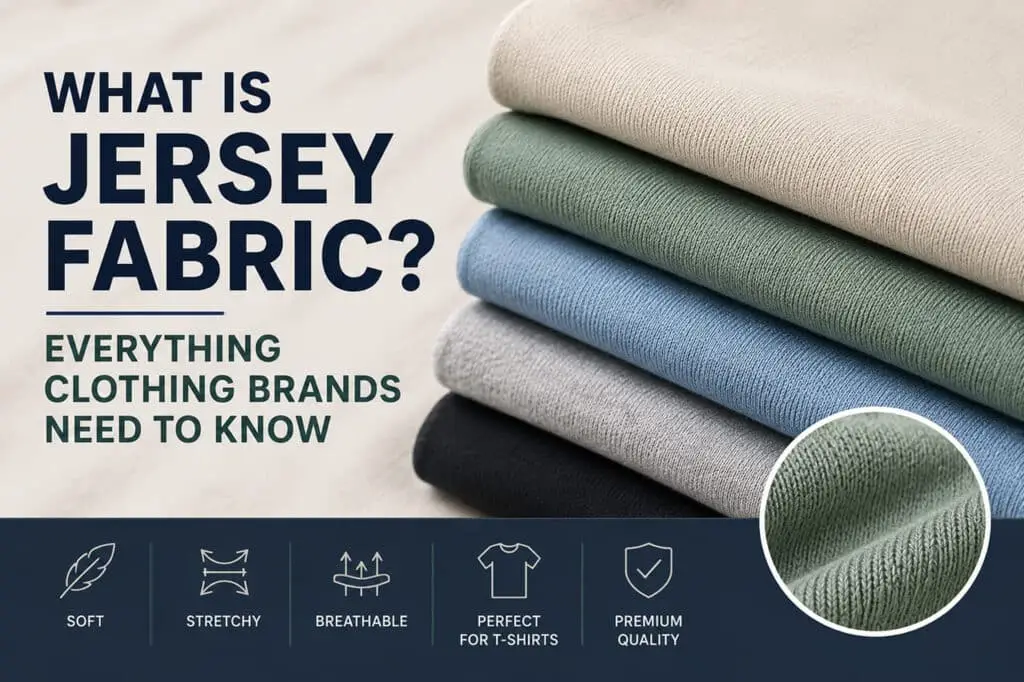
What Is Jersey Fabric?
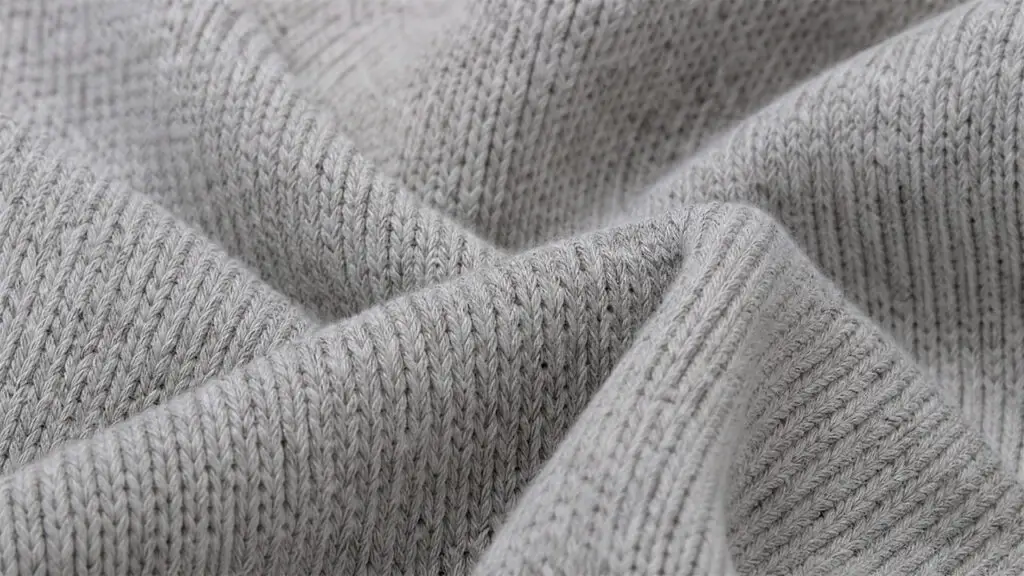
Jersey is a knit textile created by interlocking loops of yarn in a continuous, single-direction pattern. Unlike woven fabrics (which interlace threads at right angles), jersey is built on knitting machines that form interconnected rows of loops. This structure delivers the signature stretch, softness, and recovery that define jersey's comfort and fit.
The name "jersey" comes from the Channel Island of Jersey, where wool knitwear was first made for fishermen's garments. Today, jersey refers to any knit fabric with this loop-based construction—now produced in a wide range of fibers and weights for fashion, sportswear, and more.
What Is Jersey Knit Fabric?
Jersey knit fabric is the technical term for this construction method. It features a smooth, flat face (ideal for printing) and a slightly textured reverse. The interlocked loops allow the fabric to stretch horizontally (and slightly vertically), ensuring garments move with the body instead of restricting it. This built-in elasticity is why jersey knit works for everything from fitted basics to relaxed streetwear silhouettes.
Single Jersey vs Double Jersey
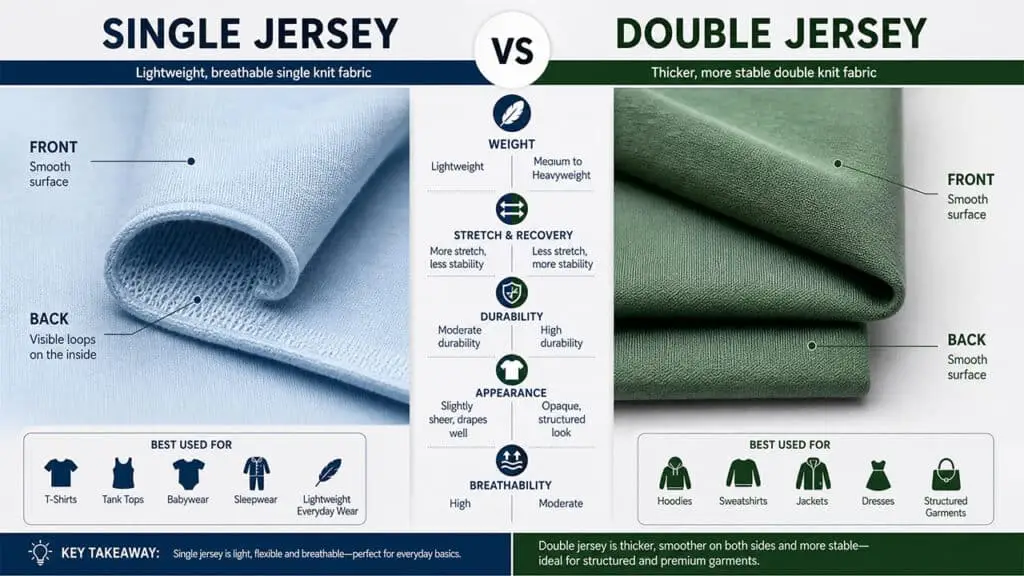
- Single jersey uses one set of needles, producing a lightweight, one-sided knit with a smooth front and a visible looped back. It's the standard for t-shirts and casual tops, prized for breathability and drape. The cut edges tend to curl—a natural trait handled by experienced manufacturers.
- Double jersey (also known as interlock knit) uses two needle sets, yielding a thicker, more stable fabric with a smooth surface on both sides. It has less stretch, more structure and is favored for premium tees, dresses, and structured garments.
Why Jersey Feels Soft and Stretchy
Jersey's celebrated softness comes from its looped knit construction, high-quality fibers, and finishing processes. The absence of rigid interlacing (as in woven fabrics) means the yarns remain supple and flexible. The stretch is inherent to the knit structure—the loops elongate under tension and contract when released. Adding spandex or elastane enhances recovery, but even 100% cotton jersey offers natural give and comfort.
How Jersey Knit Fabric Is Made
The journey from yarn to finished jersey involves careful fiber selection, advanced knitting, and expert finishing. Each stage directly impacts how your garment will look, feel, and perform.
Common Fibers Used in Jersey
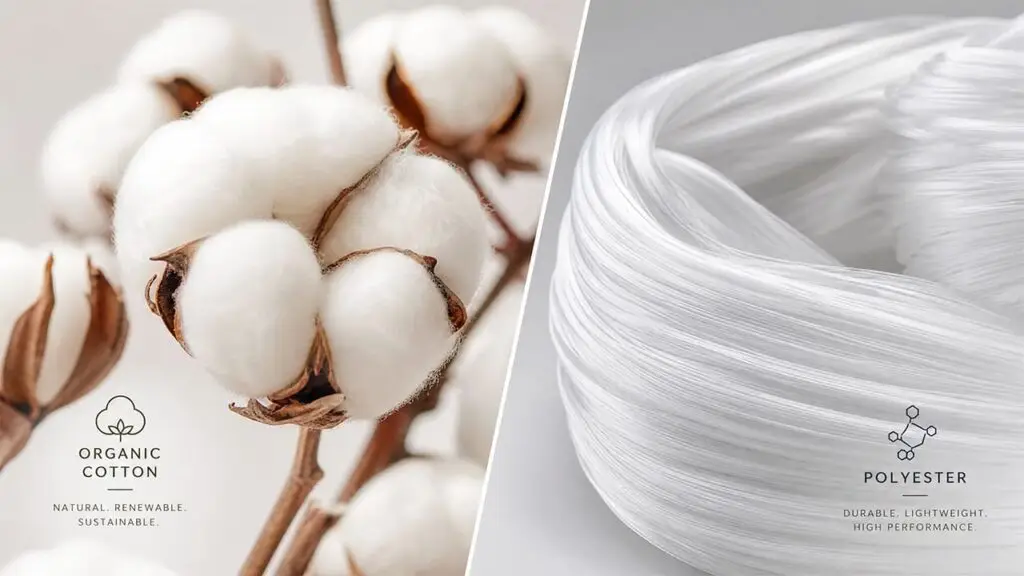
- 100% cotton jersey: Classic, soft, breathable, and ideal for premium and sustainable T-shirts.
- Polyester jersey: Durable, quick-drying, and shrink-resistant, which is best for performance and athletic wear.
- Cotton-polyester blends: Balance the comfort of cotton with the resilience and easy care of polyester; popular for value-focused production.
- Rayon jersey: Has a silky drape, making it suitable for fashion-forward or luxury basics.
- Spandex blends: Add 3–10% elastane for extra stretch and recovery, perfect for fitted garments and activewear.
For most streetwear and premium t shirt fabric, 100% cotton jersey and cotton-dominant blends are preferred.
Combed Cotton vs Ring Spun Cotton
- Ring spun cotton is twisted and thinned, resulting in a finer, softer, and stronger yarn than standard open-end cotton. It's the baseline for premium jersey production.
- Combed cotton takes this further: the fibers are combed to remove short strands and impurities, yielding a smoother, softer yarn with better durability and less pilling.
- Combed ring spun cotton merges both methods and is the gold standard for luxury t-shirts—well worth the investment for brands seeking a superior hand feel and longevity.
Fabric Finishing and Softening Processes
Once knitted, jersey fabric goes through finishing processes like enzyme washing (to make it softer and reduce pilling), sanforization (to pre-shrink it for dimensional stability), and mechanical or chemical softening. These steps ensure the fabric feels great, performs consistently, and maintains size after washing.
For a deeper dive into how GSM (fabric weight) affects jersey performance, visit What Does GSM Mean in Fabric?
Why Jersey Fabric Is Popular for T Shirts
Jersey is the undisputed standard for t-shirts across the basics, premium, and streetwear categories. No other textile offers the same mix of comfort, efficiency, and versatility.
Why Cotton Jersey Works Well for T-Shirts
Cotton jersey is naturally soft, breathable, and moisture-absorbing. It drapes comfortably for both fitted and oversized styles and is compatible with all major printing and dyeing processes. From a manufacturing perspective, it cuts cleanly, sews well, and delivers consistent results at scale—critical for both startups and established brands.
Heavyweight Jersey Knit and Oversized Streetwear
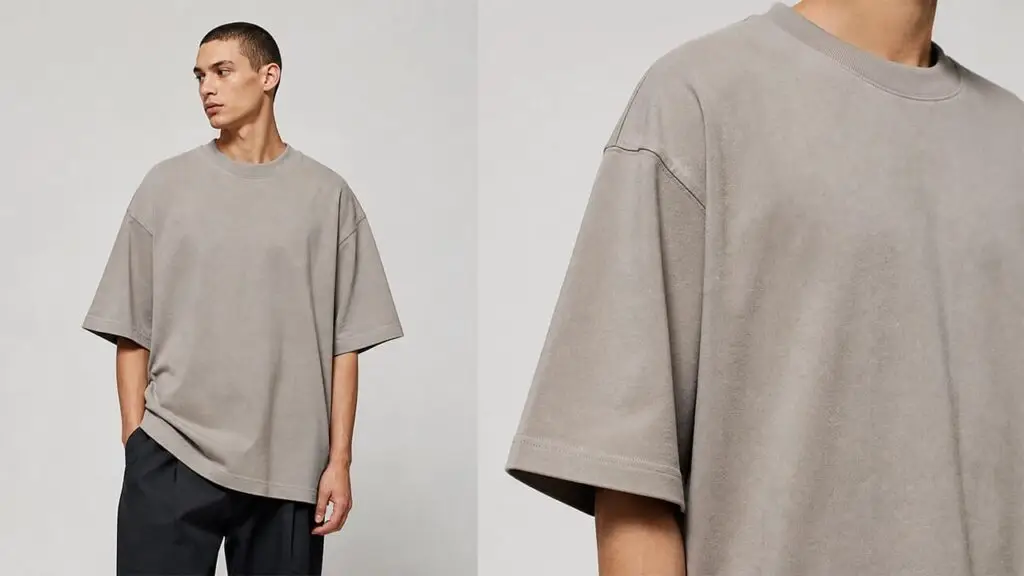
Heavyweight jersey knit fabric (typically 220–320 GSM) defines modern streetwear and premium basics. These fabrics deliver a substantial hand, maintain shape after repeated washes, and offer the structure needed for oversized t shirts and luxury streetwear blanks. Customers associate heavyweight jersey with high quality and durability—making it a must for brands chasing a premium aesthetic.
For more on fabric weight and fit, see Heavyweight vs Lightweight T Shirts
Jersey Fabric for Printing and Embroidery
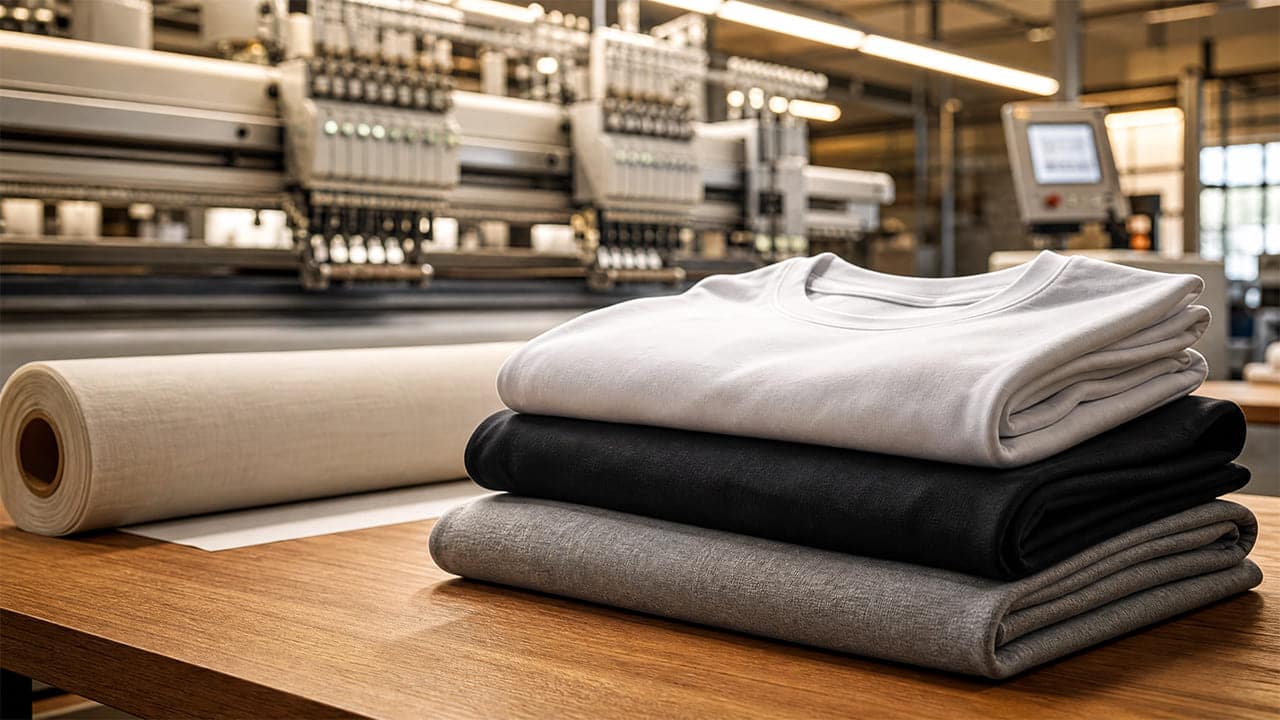
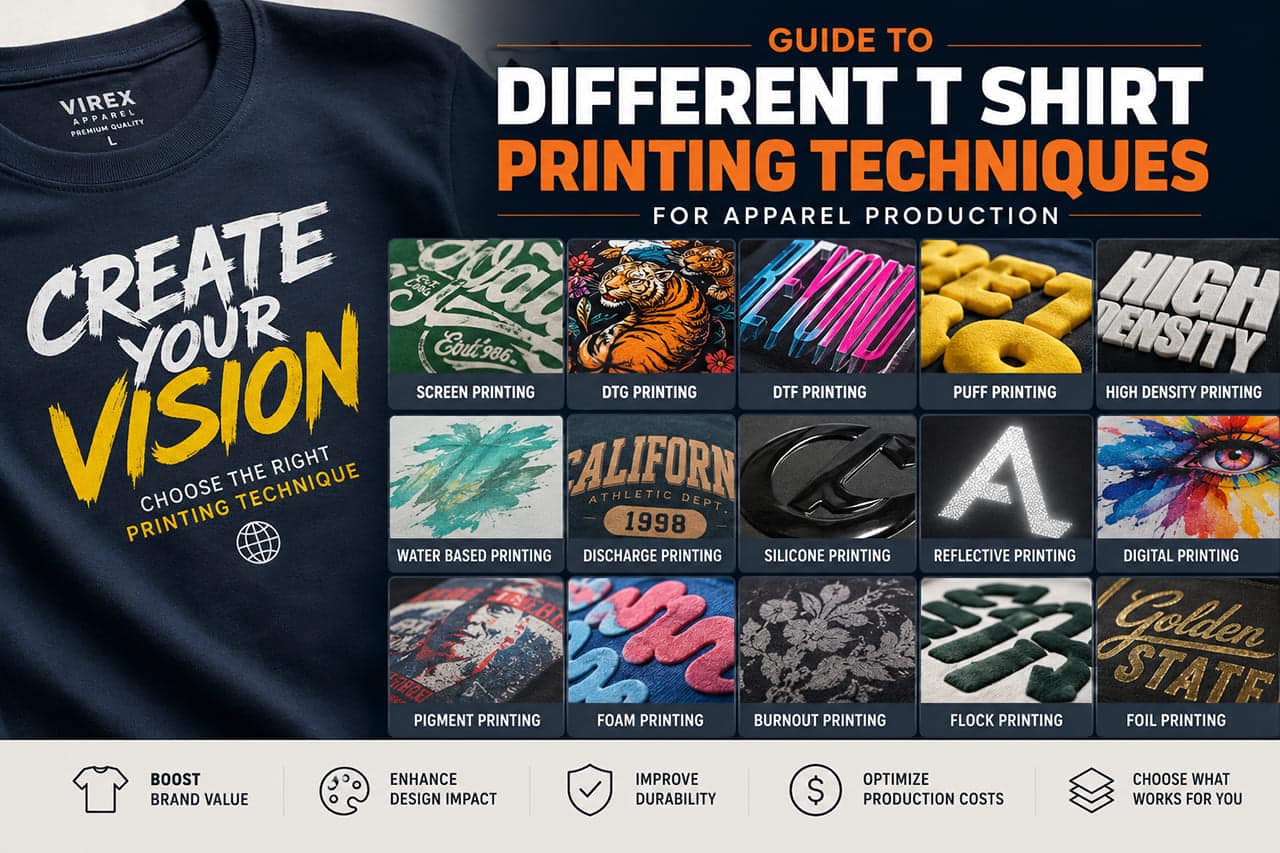
Single jersey's smooth surface is perfect for screen printing, DTG, embroidery, and even puff print. Cotton jersey absorbs ink well, yielding crisp, vibrant graphics. For embroidery, heavier jerseys provide a stable base, while proper stabilization prevents distortion on lighter weights.
Cotton Jersey vs Polyester Jersey
The choice between cotton jersey and polyester jersey is fundamental—each offers distinct advantages depending on your brand's needs and target audience.
Advantages of Cotton Jersey
- Unmatched softness and breathability
- Rich dye uptake and excellent print quality
- Premium, natural feel—favored by fashion and streetwear brands
- Sustainable when responsibly sourced (see Textile Exchange)
- Biodegradable and consumer-preferred for comfort
Advantages of Polyester Jersey
- Superior moisture management and quick-drying
- Strong, colorfast, and shrink-resistant
- Less expensive—ideal for budget basics and activewear
- Sublimation printing compatibility for vivid all-over graphics
Which Jersey Material Is Better for Your Brand?
- Streetwear, fashion, and premium basics: Cotton jersey or cotton-rich blends for feel, perception, and breathability.
- Performance and activewear: Polyester jersey or blends for moisture-wicking, durability, and cost.
- Blends: Common for finding a middle ground between hand feel and durability.
For a comprehensive breakdown, see Cotton vs Polyester T Shirts
Understanding Jersey Fabric GSM
GSM (grams per square meter) is the industry standard for measuring fabric weight. It directly affects how your jersey fabric looks, feels, and performs.
Lightweight Jersey Fabric
- 120–160 GSM
- Best for summer t-shirts, layering pieces, and basics where breathability and minimal weight are priorities
- Soft drape but can appear less premium or slightly see-through
Midweight Jersey Fabric
- 160–220 GSM
- The workhorse for most fashion basics and branded tees—balanced feel, structure, and durability
- Suitable for most retail-ready t shirts
Heavyweight Jersey Fabric
- 220–320+ GSM
- The hallmark of luxury streetwear, oversized t shirts, and premium blanks
- Feels substantial, resists warping, and retains shape after numerous washes
Selecting the right GSM is crucial for aligning with your brand's target market and garment application.
How Clothing Manufacturers Test Jersey Fabric Quality
Top-tier apparel manufacturers never skip quality assurance. Before any fabric hits the cutting table, it undergoes a series of rigorous tests.
Shrinkage and Wash Testing
Shrinkage is tested by simulating multiple wash/dry cycles. Patterns are adjusted to account for any residual shrinkage, ensuring the final product fits correctly after customer use.
Pilling and Durability Testing
Pilling resistance is checked with abrasion tests, especially critical for lower-grade fibers. Combed ring-spun cotton and premium blends show superior resistance. Fabrics with OEKO-TEX certification have been tested for both safety and durability—an extra assurance for brands selling to discerning customers.
Fabric Inspection Before Production
Manufacturers use a 4-point inspection system to catch defects like holes, shading, and width variation. This step is far less costly than resolving issues after production and guarantees only top-quality fabric makes it into your garments.
Is Jersey Fabric Good for Streetwear Brands?
Heavyweight cotton jersey is now the signature of modern premium streetwear. The trend toward substantial, structured, and garment-dyed tees is as much about tactile quality as it is about fit and finish.
Why Streetwear Brands Prefer Heavyweight Jersey
- Oversized fits hold their shape and drape with presence
- Enhanced print and embroidery quality
- A tactile "premium" feel that customers instantly recognize
Garment Dyed Jersey Fabric
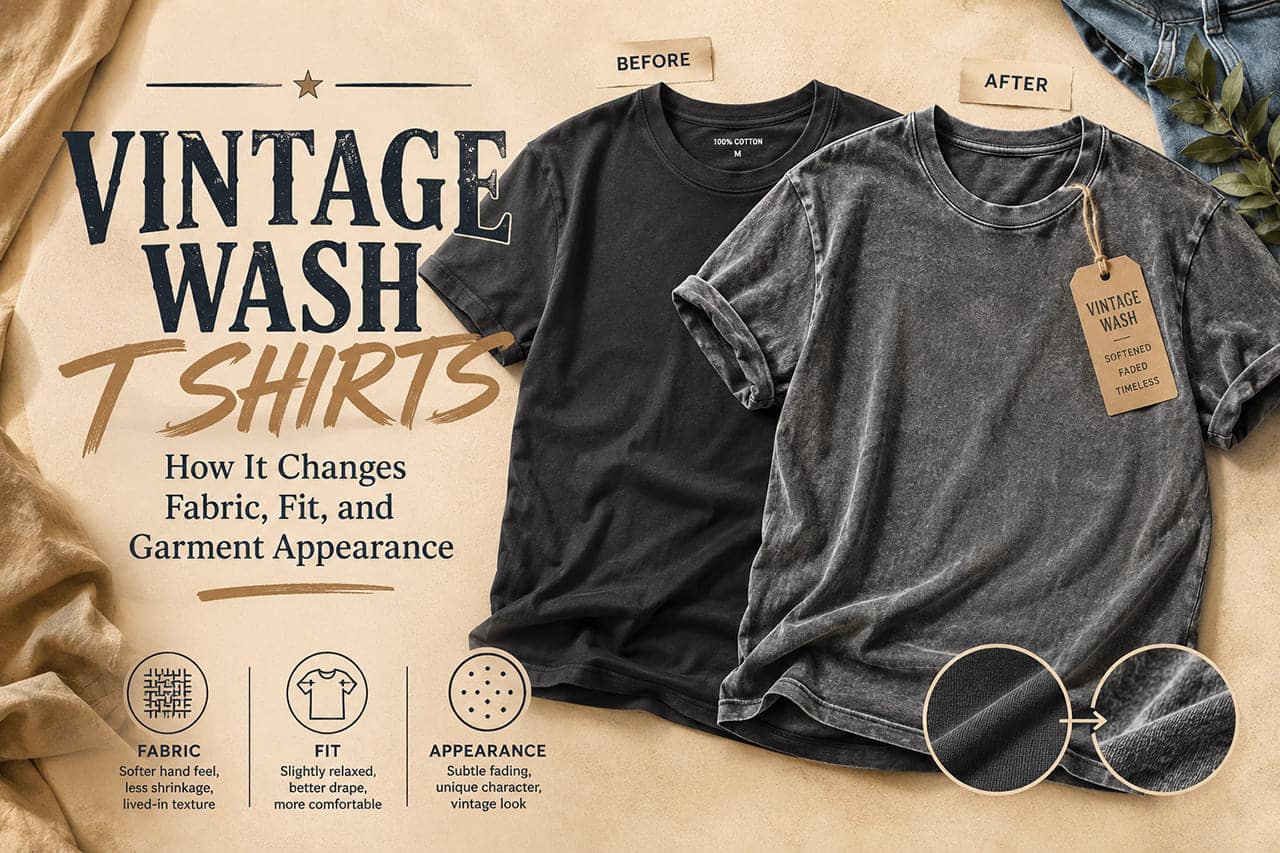
Garment dyeing gives heavyweight jersey unique, vintage-washed tones and a broken-in feel. The density of heavyweight jersey allows for richer, more nuanced colors, making each piece subtly unique—a major selling point in today's streetwear market.
Premium Jersey Fabric for Luxury T Shirts
At the very top end, brands use exclusive Supima, Egyptian, or custom ring-spun cotton jerseys with proprietary GSM specs and specialty finishes. These fabrics aren't off-the-shelf; they're developed as part of a brand's signature and identity.
Conclusion
Jersey fabric remains the foundational textile for modern t shirts, streetwear, and casual wear. Its unique structure, blend of comfort and durability, and adaptability to trends make it essential for any serious apparel brand. By understanding jersey's fibers, construction, GSM, and quality controls, you position your brand for consistent excellence—from first samples to bulk production.
Whether you're launching a streetwear line, developing luxury basics, or scaling a private label business, informed fabric decisions lead to better garments, happier customers, and a stronger brand identity.
Key Takeaways
- Jersey fabric is a knit textile with built-in stretch, softness, and comfort, unlike woven textiles.
- Single jersey is standard for t-shirts; double jersey (interlock) is thicker and more structured.
- Combed ring-spun cotton is the premium choice for superior softness and durability.
- GSM defines the fabric's weight—heavyweight jersey (220+ GSM) is the new standard for premium streetwear.
- Cotton jersey is ideal for fashion and lifestyle; polyester jersey suits performance and value basics.
- Quality manufacturers rigorously test for shrinkage, pilling, and defects before production.
- Heavyweight, garment-dyed cotton jersey is in high demand for luxury and streetwear brands.
Frequently Asked Questions
Q: What is jersey fabric used for?
A: Jersey fabric is used for t-shirts, hoodies, casual tops, dresses, underwear, and activewear—anywhere comfort and stretch are key.
Q: Is jersey fabric good for t shirts?
A: Absolutely. Jersey knit fabric is the gold standard for t shirts thanks to its softness, flexibility, and print compatibility.
Q: What is the difference between single jersey and double jersey?
A: Single jersey uses one needle set for a lightweight, stretchy fabric; double jersey (interlock) uses two sets, resulting in a thicker, more stable fabric with less stretch.
Q: What GSM is best for jersey knit fabric?
A: Lightweight (120–160 GSM) for summer and layering, midweight (160–220 GSM) for everyday tees, heavyweight (220–320+ GSM) for premium streetwear and oversized fits.
Q: Is cotton jersey better than polyester jersey?
A: For fashion and streetwear, cotton jersey is best for softness and breathability. Polyester jersey is top for durability and moisture management in sportswear.