
Ask any factory owner what keeps streetwear founders up at night, and they'll tell you it's the fabric. We've spent years in the trenches of apparel development, helping brands scale from their first 200 pieces drop to massive seasonal collections. The most consistent question? "What best fabric for t-shirts should I use?"
It's not a simple choice. Fabric is the single variable that dictates whether your tee looks premium on a shelf or like a cheap souvenir after one wash. Get it right, and your graphics pop. Get it wrong, and no amount of clever branding will save the product.
Most startups learn this through expensive failure. They approve a fresh sample that looks great in the studio, but three washes later, customers are complaining about "bacon collars" and twisted side seams. These aren't manufacturing accidents; they are the inevitable results of choosing the wrong base material.
Structure is Everything
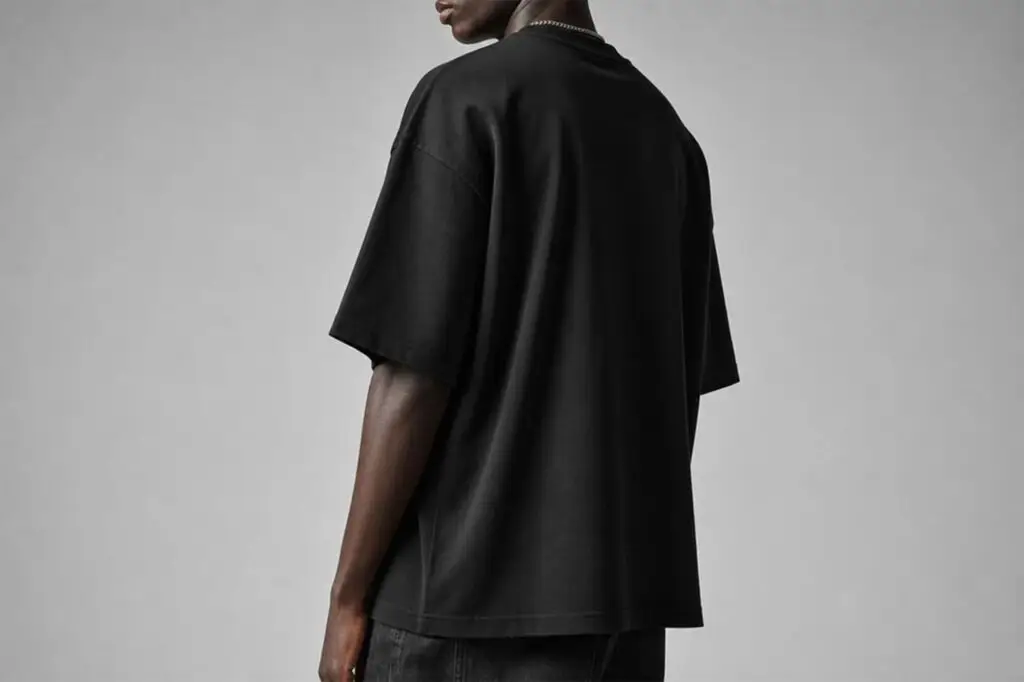
Oversized fits don't behave like standard tees. In a fitted shirt, the wearer's body does the heavy lifting. In an oversized cut, the fabric has to hold itself up.
Drape and Silhouette
When you drop the shoulder and widen the chest, the fabric needs enough "body" to fall cleanly. If it's too light, it just clings or collapses. In the industry, we call this drape. For that specific boxy look, you generally need something over 200 GSM. Anything lighter moves too much, loses its shape during wear, and looks flimsy in product photos.
Shape retention matters just as much. A sample might look sharp today, but if the yarn quality is low, that silhouette will be gone by next month.
The Cost of Cheap Material
Economy fabrics are notorious for side seam twisting. This happens when the yarn tension isn't high enough during knitting. On a standard tee, it's a minor annoyance. On a long, oversized garment, it's a disaster. Once that fabric torques after a wash, there is no fixing it.
Watch out for these common red flags:
•Torquing: Side seams migrating toward the stomach.
•Collar Wilt: Neckbands that lose their snap after three wears.
•Pilling: That fuzzy, cheap texture appearing under the arms.
•Opacity Issues: Fabrics below 180 GSM often look transparent under studio lights.
Sourcing the Best Fabric for T-shirts
The fabric you pick sets the ceiling for your brand. You can't fix a bad base with a good print.
The Heavyweight Standard
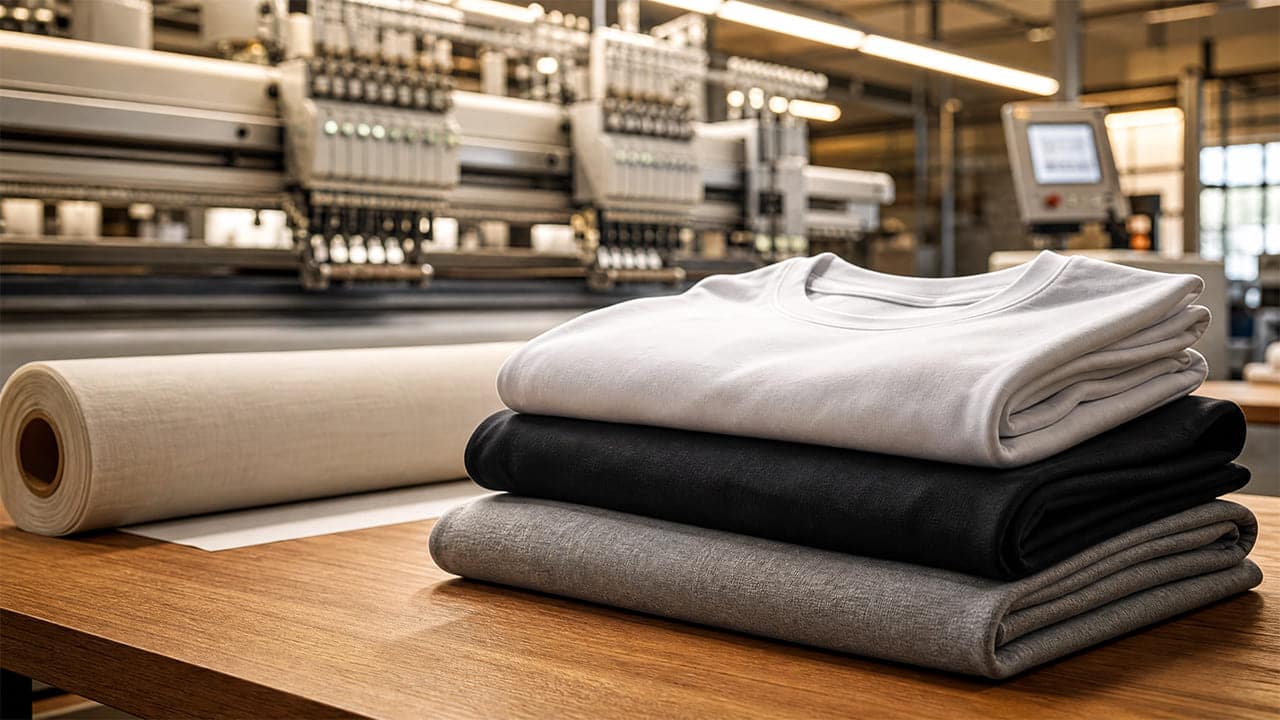
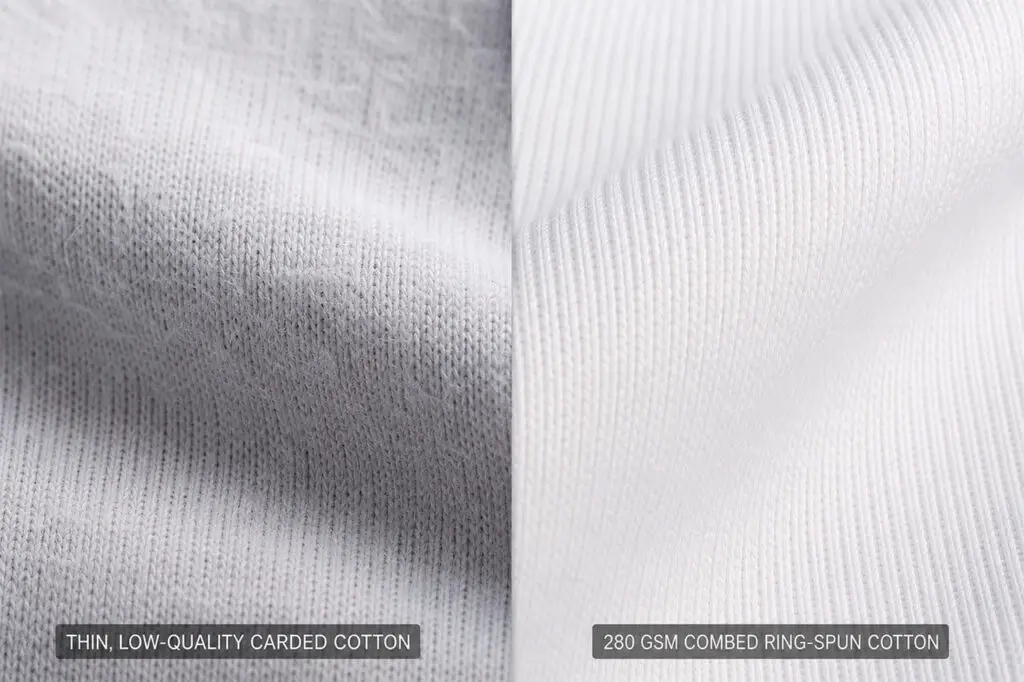
For premium streetwear, heavyweight cotton jersey is the baseline. It's stable, predictable, and takes dye beautifully. But "100% cotton" is a broad label. The real difference is between carded cotton and combed ring-spun cotton.
For a thorough breakdown of jersey construction and how different specifications affect garment performance, see What Is Jersey Fabric?
If you don't specify the yarn type in your tech pack, the factory will almost certainly use the cheapest carded cotton available. It'll feel okay at first, but it won't survive the "twenty-wash test." We usually specify single jersey in the 240 to 300 GSM range, using combed ring-spun yarns for that smooth, high-end surface.
The Power of Garment Washing
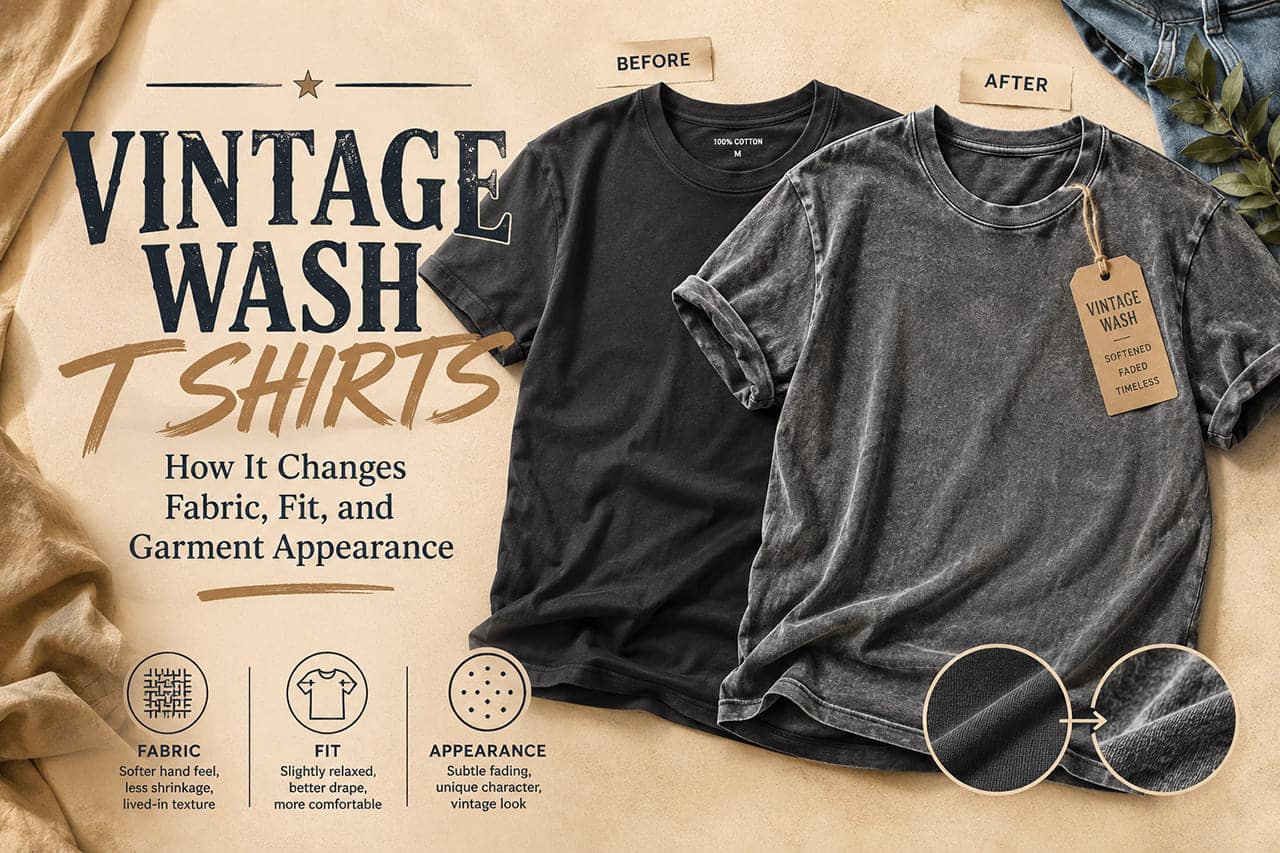
Garment washing is the secret sauce for that high-end, lived-in look. In professional production, we often start with a 240 GSM reactive-dyed 100% cotton jersey. Once the t-shirts are sewn, they are sent to a specialized garment washing factory.
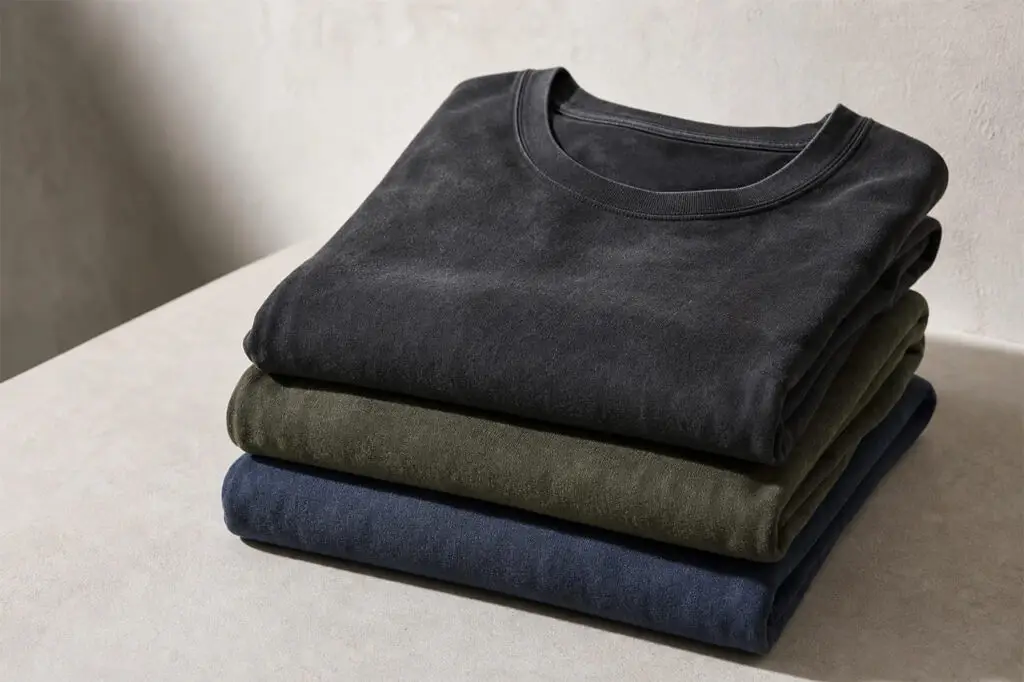
This is where the work gets done. After the garment wash process, the effective weight of the t-shirt actually increases. Because the fibers tighten and the fabric shrinks slightly during the wash, a t-shirt that started at 240 GSM will typically rise to around 255 to 260 GSM. More importantly, the hand feel becomes significantly softer and more premium than it was before the wash. It's a counter-intuitive but essential reality of high-end manufacturing: the wash makes it heavier and softer at the same time.
Cotton vs. Blends
You'll hear a lot of talk about 60/40 or 50/50 cotton-poly blends. They're great for reducing shrinkage and lowering costs, but they feel synthetic. If you're positioning your brand as premium, 100% cotton is the only way to go. Blends are for budget lines or performance gear.
Mastering GSM
GSM (grams per square meter) is how we measure weight. It's straightforward, but how it interacts with the fit is where the skill lies.
For a full explanation of how GSM works in apparel production and sourcing, see What Does GSM Mean in Fabric?
The Weight Tiers
•140–180 GSM: Too light for oversized fits. Expect twisting and zero structure.
•180–220 GSM: Good for basics or hot climates, but lacks that "luxury" weight.
•240–280 GSM: The sweet spot for premium streetwear. This is where you get the best drape and durability.
•300+ GSM: Heavy. Great for statement pieces, but watch your shipping costs.
The Wash Factor
As experienced suppliers know, your target finished weight isn't your starting weight. If you want that perfect 260 GSM feel, starting with a 240 GSM base and putting it through a professional garment wash is often the most effective route. The process tightens the knit, adding about 15 to 20 GSM to the final piece while breaking in the fibers for that signature streetwear softness.
Don't Ignore the Collar
The collar is typically the first part to fail. A great shirt with a sagging neck is a shirt that gets thrown away.
For a detailed breakdown of rib fabric construction and how different specifications perform across garment types, see What Is Rib Fabric?
Construction Matters
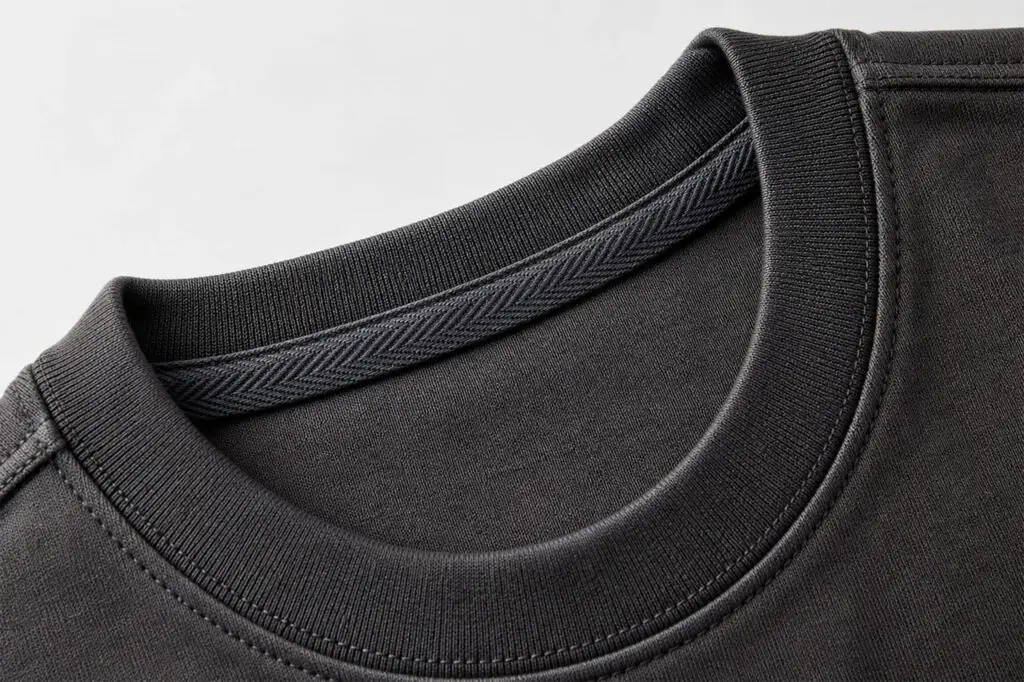
For oversized tees, you need a heavyweight rib—usually 280 to 350 GSM. It needs enough elastane (3% to 5%) to snap back after being pulled over a head. Cheap collars use 100% cotton rib or single-layer construction. They look fine in the bag, but they have zero "memory." After a few wears, they stay stretched out.
A professional collar setup includes the following:
•Double-layered rib for depth.
•Coverstitching to lock the attachment.
•Reinforced back neck tape to prevent the shirt from drifting forward.
The Testing Phase
A sample is just a proof of concept. You need to know how the bulk order will behave.
Shrinkage is Real
100% cotton shrinks. It's unavoidable. On an oversized tee, a 5% loss in length can ruin the fit. We wash-test everything for at least five cycles before moving to bulk. Garment-washed programs are inherently more stable because the factory wash process acts as a massive pre-shrunk treatment.
Consistency in Hand Feel
Washing 500 shirts at once is difficult. Temperature spikes or chemical imbalances can make one batch feel different from the next. We pull samples from different parts of the washing machine to ensure every customer gets the same quality.
Investing in Quality Programs
Brands targeting premium positioning should also look for base fabrics carrying OEKO-TEX® Standard 100 certification. This certification verifies that fabrics have been tested against a comprehensive list of harmful substances. For brands with sustainability commitments, Textile Exchange provides standards and resources around responsible cotton sourcing and supply chain transparency.
Strategy and Sourcing
Fabric choice is a business decision. You have to align your material with your retail price.
If you're charging $100 for a tee, you can afford the 280 GSM combed ring-spun cotton and the specialized garment wash process. If you're at $35, you'll have to be more creative. A well-executed 200 GSM shirt is always better than a poorly made 280 GSM one.
Climate also plays a role. A 300 GSM heavyweight tee is a nightmare in a humid summer. If you sell globally, you need a two-tier strategy: lighter weights for year-round basics and heavyweights for seasonal drops.
The Bottom Line
Graphics get people to buy. The fabric gets them to stay.
Heavyweight cotton, high-quality yarn, and a solid collar aren't just technical specs—they are the foundation of your brand's reputation. Invest in your fabric development early. It's the only way to build a product that people actually want to wear twice.
FAQ
Q: What's the best fabric for an oversized tee?
A: 240 to 280 GSM 100% combed ring-spun cotton. For a premium finish, start with 240 GSM and use a professional garment wash to reach 260 GSM.
Q: Why does my collar stretch?
A: Probably low elastane or single-layer construction. Switch to a heavyweight rib with at least 3% elastane.
Q: Does washing make the shirt lighter?
A: Actually, a professional garment wash often makes the shirt feel heavier (adding 15-20 GSM) because the fabric tightens, while also making it much softer.
Q: Should I use cotton-polyester blends?
A: Only if you're prioritizing cost or moisture-wicking. For premium looks, stick to 100% cotton.