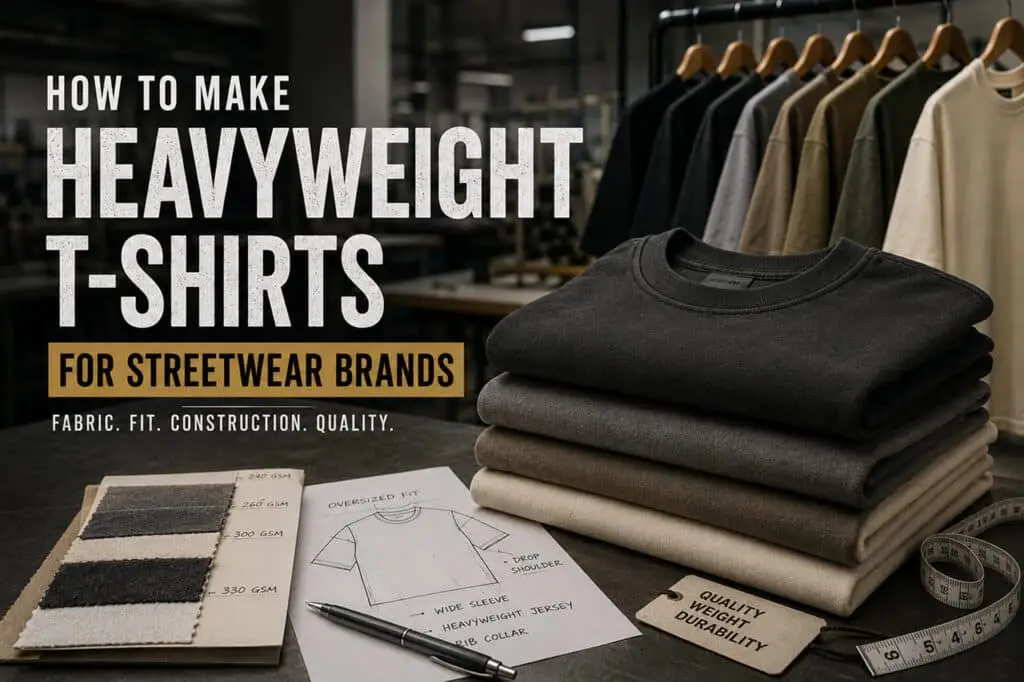
Heavyweight t-shirts are now one of the most important products in streetwear. Brands that were selling 180 GSM basics a few years ago are now developing 260–300 GSM streetwear tee shirts with structured collars, enzyme washes, and oversized silhouettes.
The demand is real. So is the production complexity.
What most startup brands underestimate is how much harder heavyweight t shirts are to produce correctly. The fabric behaves differently on the cutting table, sews differently, and responds to washing in ways that cheaper cotton doesn't. If the collar is poorly made, the whole garment will appear inexpensive, no matter how much the fabric costs.
What Makes T-Shirt Truly Heavyweight
Most people reduce this to one number: GSM. We've handled 260 GSM fabrics that felt hollow and cheap and 240 GSM fabrics that felt dense and premium. How the fabric was built matters more than what it weighs.
GSM vs Fabric Quality
GSM measures weight. It doesn't measure quality.
Fabric can achieve high GSM by using loose, bulky knitting, resulting in loft but lacking true density. That fabric compresses easily and pills faster. Compact construction at a lower GSM will outperform it. See our guide on What Does GSM Mean in Fabric? for a full breakdown.
Higher GSM does not mean better quality of fabric. E.g. 140 GSM fabric will generally be made from finer 40s yarn, and 260 GSM fabric will generally be made from thicker 21s double yarn. But the 40s yarn is actually more expensive in many cases because it uses better quality cotton and more precise spinning. 40s yarns are also used in fabrics that feel smoother, tighter, and cleaner than heavier fabrics made with thicker yarns.
Why Yarn Quality Matters
- Carded: Cheaper, coarser fiber structure.
- Ring-spun: Smoother, stronger, more consistent.
- Combed ring-spun: Shorter fibers are removed, resulting in cleaner and softer result.
Low-quality yarn at 300 GSM means significantly more pilling risk and dye inconsistency. More fabric means more of everything, including the problems.
Compact Knitting and Fabric Density
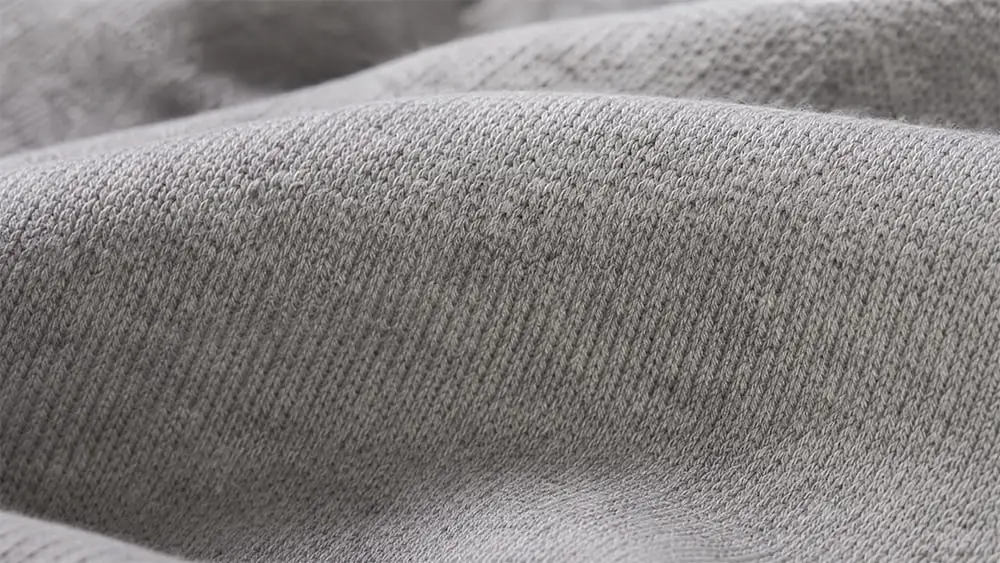
Compact knitting, which uses tight loops with very little air between them, results in improved dye uptake, greater dimensional stability, and a heavier hand feel even when the GSM is the same. Many startup brands often overlook this detail, they focus only on specifying GSM and leave the knit structure undefined, which leads mills to choose the easiest option for production.
Choosing the Right Fabric for Heavyweight T-Shirts
Most heavyweight streetwear t shirts are built on single jersey cotton at 240 GSM or above. What Is Jersey Fabric? Weft-knit construction with a smooth face and looped back. It's the global standard for t-shirt production.
Combed Ring-Spun Cotton
Carded cotton works for basics. Combed cotton removes shorter fibers, resulting in a smoother surface, more uniform dye absorption, and improved durability through washing. Ring-spun spinning creates a tighter, more consistent yarn with less pilling than open-end alternatives. For premium heavyweight streetwear, combed ring-spun is the standard we work with.
Fabrics That Work Best for Garment Washing
Looser knit structures distort, over-shrink unevenly, and develop surface irregularities during wash. The best fabrics for garment dyeing are tightly knit, combed ring-spun cotton, pre-relaxed before cutting. According to Cotton Incorporated, cotton is naturally suited for garment washing but yarn and fabric quality determine consistency across a production run.
Best GSM for Heavyweight Streetwear T-Shirts
- 220–240 GSM: Entry-level heavyweight; easier to sew, less structured drape on oversized silhouettes.
- 240–280 GSM: The sweet spot; enough density to hold shape, still manageable in production, handles garment washing well.
- 300+ GSM: Stiffer before washing, harder to sew cleanly, higher cost across the board.
For most brands, 260–280 GSM is where we'd start. See also: Heavyweight vs Lightweight T-Shirts.
How GSM Changes After Garment Washing
From our experience as custom apparel manufacturers, garment washing often increases the final GSM of heavyweight t shirts by around 15–20 GSM because the fabric tightens and becomes denser during washing while also becoming softer. A 260 GSM fabric can finish at 275–280 GSM. Brands that don't account for this are often surprised when bulk feels different from the sample.
Heavyweight fabric feels premium because of its dense knit structure, softness gained from washing, clean drape, and dimensional stability. If any of these qualities are missing, the garment will not meet expectations.
Pattern Making for Heavyweight Oversized T-Shirts
Oversized Fit Development
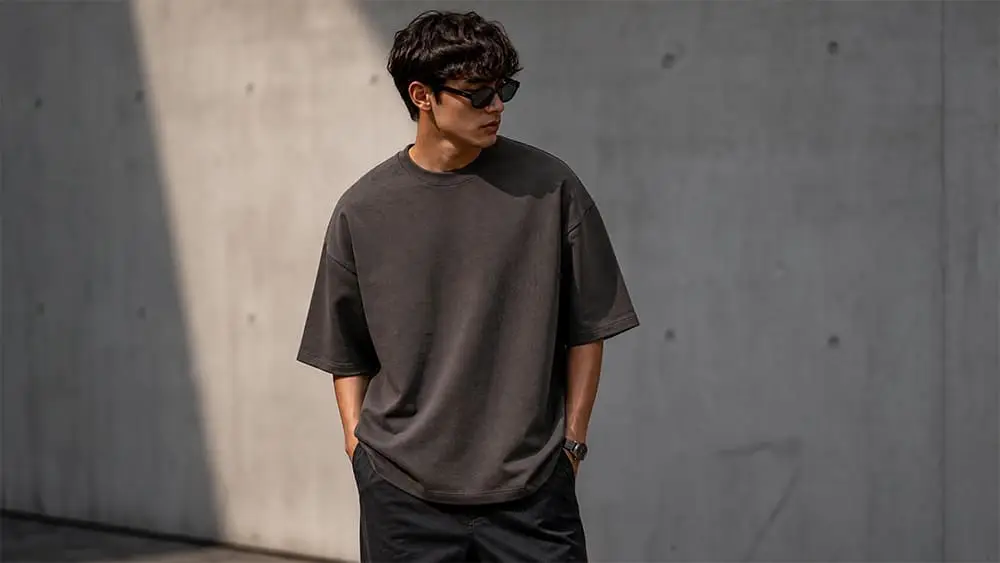
Oversized patterns developed for lightweight fabric don't translate directly. Heavyweight fabric increases visual mass, so sleeves that look balanced in 180 GSM may appear overly bulky when made with 280 GSM material. Experienced pattern makers adjust sleeve width, armhole depth, and shoulder angle accordingly. Get the shoulder wrong and the silhouette reads as sloppy rather than intentionally oversized.
Heavier fabric also pulls downward with more force, elongating the garment and affecting how the hem sits. Patterns designed for 180 GSM fabric often require changes when using 280 GSM, and these necessary adjustments typically become clear after the first wash.
Why Rib Collars Matter on Heavyweight T-Shirts
The collar is where cheap production reveals itself immediately.
Heavyweight Rib Construction
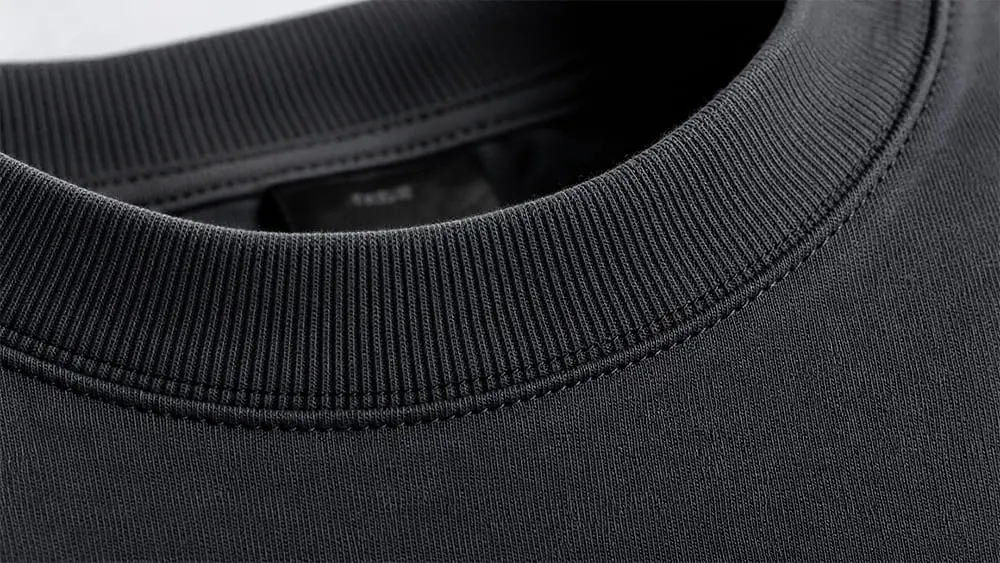
Use 2x2 or 1x1 rib at 400 GSM or above, combed ring-spun cotton with 3–5% elastane. Without elastane, the collar won't recover after repeated wear. See What Is Rib Fabric?
Why Collars Stretch Out
The causes are usually one of three things:
- Rib fabric with insufficient elastane.
- Collar attachment sewn too loosely.
- Rib attached without proper tension management.
Too tight and it puckers. Too loose and it stretches out permanently. Double needle stitching secures the collar and helps it keep its shape after multiple washes. Make sure to specify this in your tech pack, as not all factories include it by default.
Garment Washing and Vintage Finishing
Garment Dye: The Standard in Heavyweight Streetwear
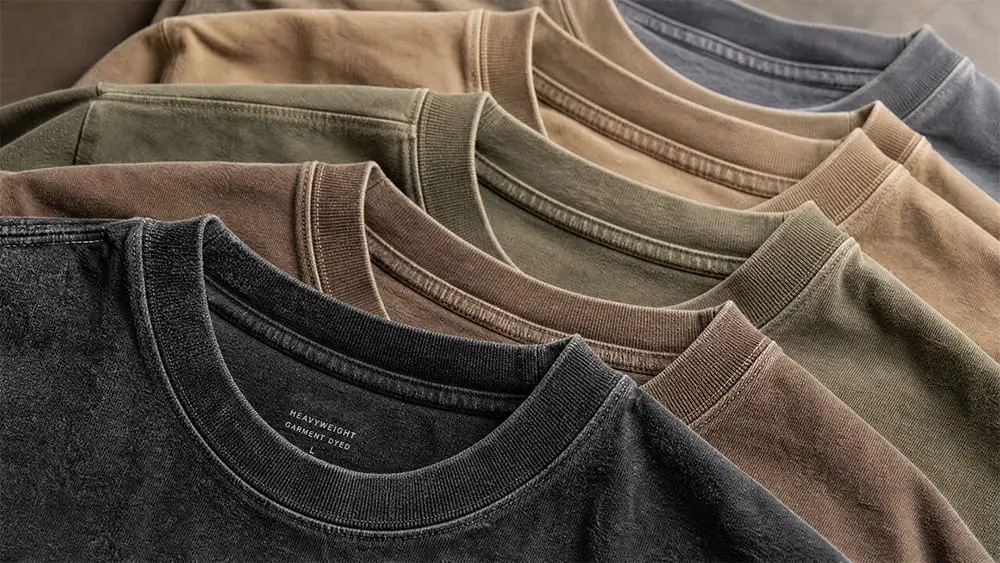
Most premium heavyweight streetwear t-shirts are garment dyed, meaning they are cut and sewn from greige fabric first and then dyed after the garment is assembled. This creates organic color depth and surface variation that piece dyeing can't replicate.
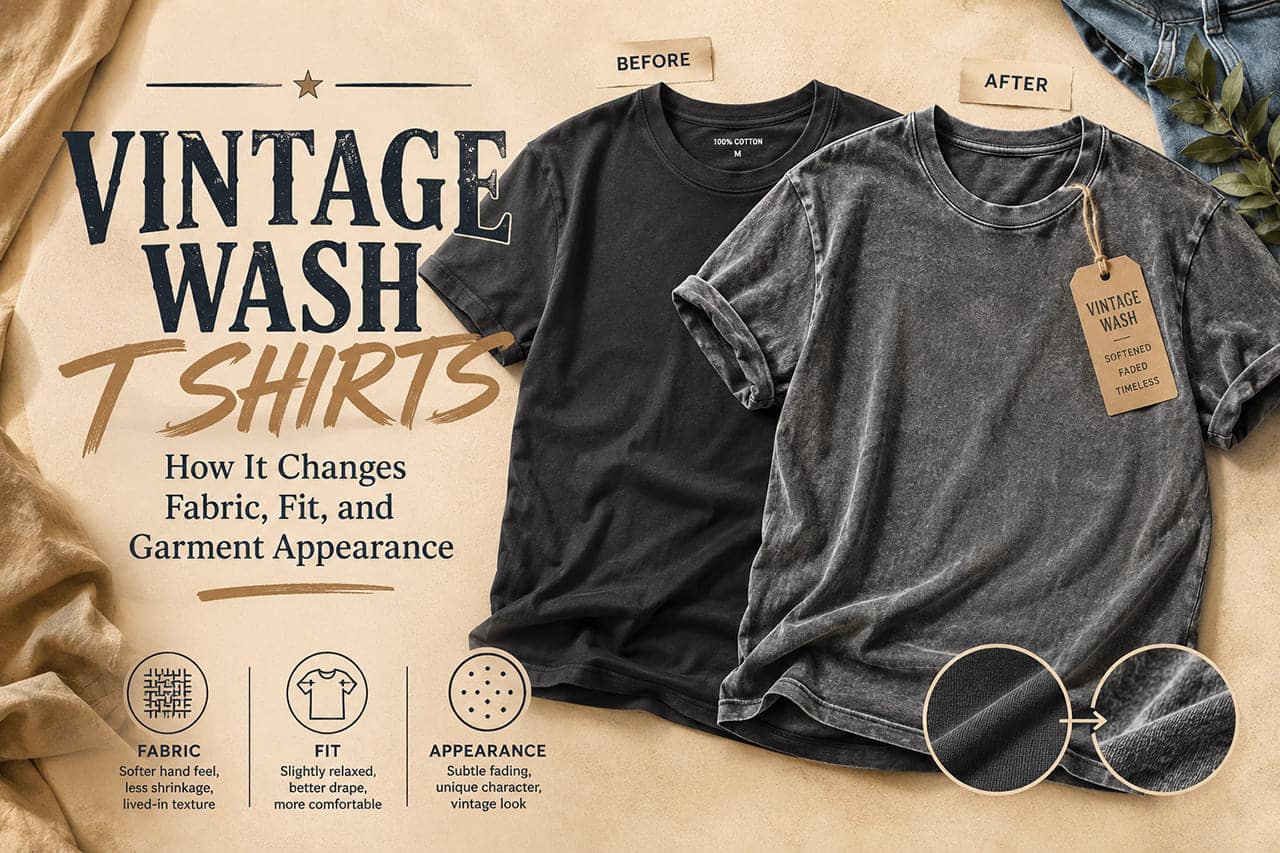
It requires real process control. Temperature variance of just a few degrees during the dye cycle can produce visible shade differences within the same order. 280 GSM unwashed garment feels stiff and boardy after enzyme wash, the same fabric feels dense but soft. That transformation is a core part of the product.
Wash and Dye Techniques
- Enzyme Wash: Breaks down surface fibers, softer hand feel, slight fading.
- Sun-Faded Spray Paint: Pigment sprayed directly onto the garment for a weathered, uneven effect; results vary by angle, distance, and pigment concentration.
- Stone Wash: Mechanical abrasion, worn surface character.
- Tie-Dye: When pieces are folded or bound before dyeing, each one comes out unique. This uniqueness is part of the appeal, but it also makes achieving consistency a challenge.
- Dip-Dye: Partial submersion to create a gradient fade; color transition depth needs tight control or results vary heavily between pieces.
Tie dye and dip dye work well as limited runs. Expecting tight consistency across 300+ units usually ends in problems.
Sewing and Construction for Heavyweight T-Shirts
Sewing Heavyweight Jersey Fabric
Heavier fabric needs a larger needle size, adjusted thread tension, and machines set up for the weight. A line calibrated for 180 GSM will produce inconsistent results on 280 GSM.
Preventing Side Seam Twisting
Side seam twisting is caused by natural torque in knitted fabric and becomes obvious after the first wash. Prevention requires:
- Fabric relaxation before cutting (minimum 24–48 hours).
- Accurate grain alignment during cutting.
- Correct sewing tension.
- Shoulder taping to stabilize the seam.
In-line QC should cover seam alignment, stitch density, collar attachment, and measurements against the approved sample. Measurement drift is common in heavyweight production and needs to be caught early.
How Professional Apparel Manufacturers Test Heavyweight T-Shirts
The AATCC publishes the industry-standard test methods for shrinkage, colorfastness, and pilling resistance.
Wash and Recovery Testing
Our standard is 5 wash cycles minimum during sampling, measuring body length, width, and sleeve length before and after. Shrinkage allowance is built into the pattern from these results. Brands that skip this typically end up with garments several centimeters shorter than intended.
Recovery testing checks dimensional return after stretching. Poor recovery is most noticeable in the collar and armhole areas and often results from too little elastane in the rib components, low-quality body yarn, or fabric that hasn't been pre-relaxed before cutting.
Catching a problem during sampling costs a fraction of what it costs after bulk. Most startup brands want to move fast and minimize sampling costs. That approach almost always ends up costing more.
Common Mistakes Brands Make When Producing Heavyweight T-Shirts
The most common mistake is approving an unwashed sample. GSM increases after washing, fabric softens, dimensions change. The unwashed sample doesn't represent what the customer receives.
Choosing fabric by price per kilogram produces predictable results: pilling, dye inconsistency, seam distortion, and collar stretching. The cost difference between acceptable and premium fabric is small relative to the total garment cost, but it affects everything downstream.
Wash results consistent on 5–10 pieces often vary visibly across 500. Dyebath loading, water quality, and process time all behave differently at scale. Wash development needs larger test batches before bulk.
The most common mistakes:
- Specifying GSM without specifying knit structure.
- Ignoring yarn quality and spinning method.
- Using rib collars without adequate elastane.
- Approving unwashed samples.
- Skipping wash testing at production scale.
Conclusion
Heavyweight t-shirts need much more technical development than standard garments. Every stage, including fabric choice, GSM, collar construction, washing, sewing, and testing, impacts the final product in ways that are difficult to fix after bulk production has begun.
The brands getting this right invest in sampling and work with manufacturers who understand what these garments actually require.
FAQs
Q: What GSM is best for heavyweight t-shirts?
A: The practical GSM range for premium oversized streetwear is 240 to 280. Garment washing typically raises the effective GSM by 15 to 20, so a fabric that starts at 260 GSM often ends up at 275 to 280 GSM after garment washing.
Q: What fabric is best for heavyweight t-shirts?
A: 100% combed ring-spun cotton single jersey. The fabric offers a smoother surface, more even dye uptake, and better wash durability compared to carded or open-end alternatives. For rib collars, use combed cotton rib with 3–5% elastane.
Q: Why do heavyweight t-shirts feel more premium?
A: Compact knit structure, fabric weight that creates clean drape, and garment washing that softens without reducing density. Collar construction and seam quality matter too. Remove any of those elements and the garment falls short.
Q: Why do collars stretch out on oversized t-shirts?
A: Usually, the rib has insufficient elastane, the sewing tension is incorrect, or the rib weight is too light for the body fabric. A heavier rib with adequate elastane and double needle stitching resolves most collar stretching problems.